Drone inspection services listed in Houston
See all 6 in Houston →- 15.0★ (94) · TREC-licensed professional inspectors · InterNACHI Certified Professional Inspector (CPI)
ICON Inspection & Drone Services, LLC provides residential home inspections and related property-inspection services throughout the Greater Houston area. Its services include drone roof assessments, infrared thermal imaging, moisture detection, mold assessments, sewer scopes, and new-construction inspections. The company states it has 18 years of experience and performs inspections under Texas Real Estate Commission Standards of Practice.
- 24.7★ (42) · FAA-certified drone pilots
Professional Drone Services of Texas provides commercial drone mapping, inspection, photography, videography, thermal imaging, gas detection, and aerial survey services. It serves construction, energy, engineering, oil and gas, commercial real estate, and industrial projects across Texas and nationwide. Its site states that its drone pilots are FAA-certified.
- 3Houston
Advanced Intelligent Modelling Solutions Limited provides engineering measurement and modelling services, including drone photogrammetry and LiDar surveys, 3D laser scanning, dimensional control, and tank inspection. The site states it has provided 13 years of dedicated service.
- 4certified remote pilots
ISKY Drone Services provides commercial drone services in Houston, including aerial inspections, mapping, photography, videography, and thermal imaging for construction, real estate, and commercial projects. Since opening in 2016, it has supported projects across Houston and the United States using certified remote pilots.
- 5licensed Professional Engineers
Noble Property Inspections provides residential, commercial, mold, engineering, and drone roof inspection services. It uses drone photography for roofs that cannot be safely accessed on foot and serves Houston among multiple U.S. markets. The business states that its co-founders are licensed Professional Engineers.
Get free quotes from drone inspection in Houston
Takes about a minute. Free, no obligation; providers reply to you directly.
A project manager I know spent three days and $18,000 in scaffolding rental to inspect a petrochemical storage tank in Pasadena — only to find out after the fact that a licensed drone pilot could have done the same job in four hours for a fraction of the cost. The report would have been better too: thermal imaging, a full 3D model, geotagged damage flags. He just didn’t know those services existed in Houston.
That’s the gap this guide closes.
The Short Version:Houston has a deep bench of FAA-certified drone inspection providers, from residential roof inspectors ($300–$375/job) to industrial LiDAR operators running $1,000–$100,000+ projects at refineries and offshore rigs. Match the provider to your asset type — not every company that flies drones is equipped for your specific inspection need.
Key Takeaways:
- Drone inspections eliminate scaffolding costs and reduce worker risk for roofs, bridges, facades, and industrial infrastructure
- Houston’s oil-and-gas sector drives demand for LiDAR, photogrammetry, and thermal imaging at a scale most markets don’t see
- Expect project-based (not hourly) pricing — reputable operators won’t quote by the hour
- FAA Part 107 certification and liability insurance are non-negotiable minimums; ask before you book
Why Houston Is a Different Market
Most drone inspection content is written for the national average — a roofer in Cleveland, a GC in Phoenix. Houston is not the national average.
The presence of heavy petrochemical infrastructure along the Ship Channel, offshore rig operators, and a dense concentration of aging industrial facilities creates demand for capabilities that most residential-focused drone companies simply don’t have. When a refinery needs a progress survey or a facility manager needs a thermal scan of a 200,000-square-foot roof, they need operators with actual industrial-grade sensor packages, not a DJI Mavic and a GoPro.
Here’s what most people miss: the word “drone inspection” covers an enormous range of capabilities. A company doing single-family roof assessments is operating in a completely different technical universe than one running LiDAR-based 3D models for infrastructure assets. You need to know which world your project lives in before you start making calls.
Houston Drone Inspection Providers — What They Actually Do
For a full directory of vetted providers, see the Houston drone inspection listings.
| Provider | Best For | Key Tech | Pricing Model |
|---|---|---|---|
| FlyGuys | Industrial sites, refineries, offshore | LiDAR, photogrammetry, multispectral | Custom quote |
| THE FUTURE 3D | Roofs, facades, towers, infrastructure | Thermal FLIR, photogrammetry, LiDAR | $1,000–$100,000+ |
| ICON Inspection Services | Residential/commercial roofs | HD cameras | $300–$375 (residential) |
| Helios Visions | Bridges, overpasses, viaducts | Facade/infrastructure | Custom quote |
| Drone Services Texas | Industrial, solar, roofs | Radiometric thermal, orthomosaics | Custom quote |
| AIMS | Infrastructure, industrial | LiDAR, thermal, photogrammetry | Custom quote |
Reality Check:“Custom quote” is not evasion — it’s honest. Project complexity, asset size, access requirements, deliverable format, and turnaround time all affect cost. Any operator quoting a flat rate for industrial work before understanding your site is either inexperienced or not listening.
The Residential Side: Roofs and Facades
If you’re a homeowner, property manager, or insurance adjuster dealing with Houston’s hail and hurricane exposure, the residential tier is well-developed.
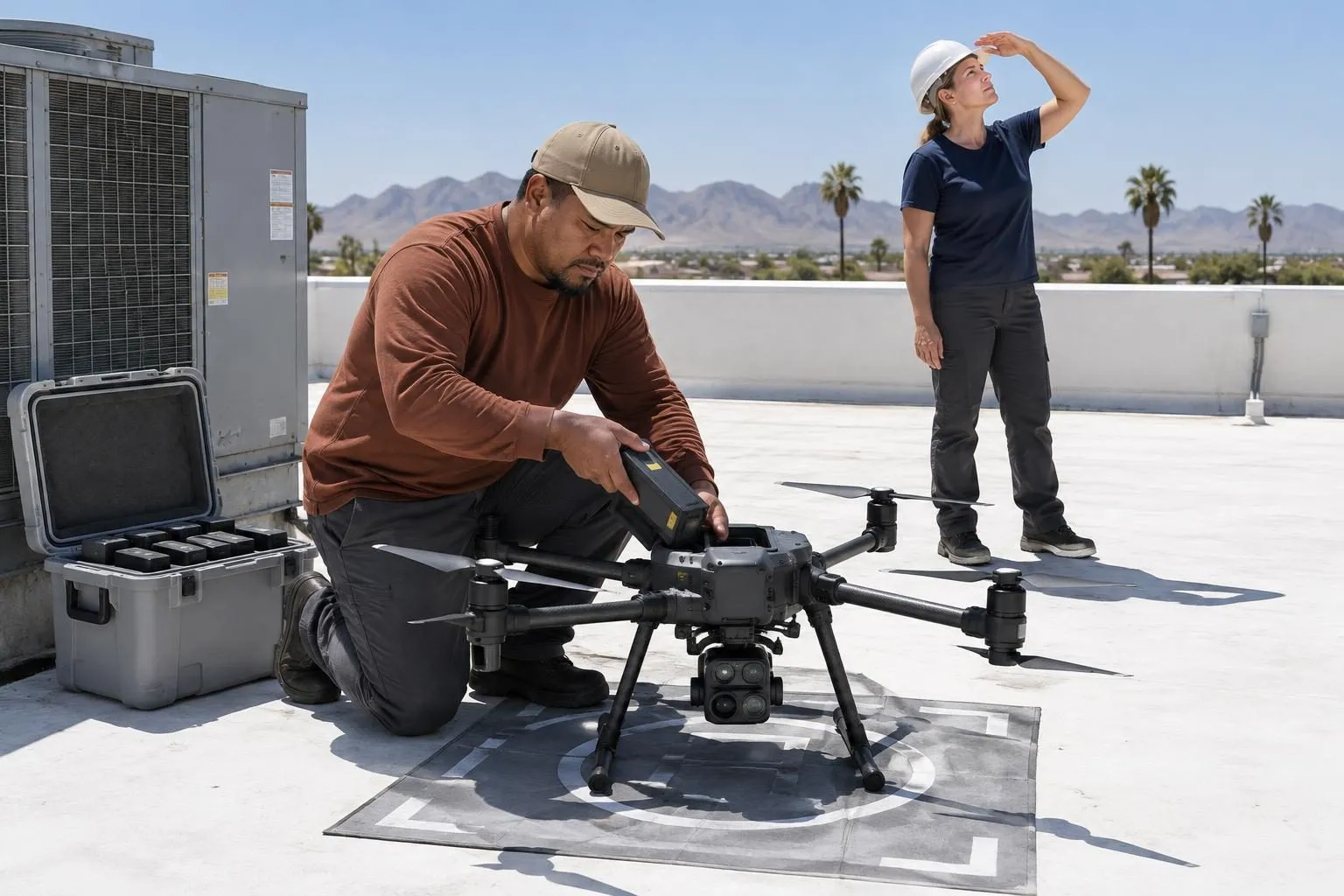
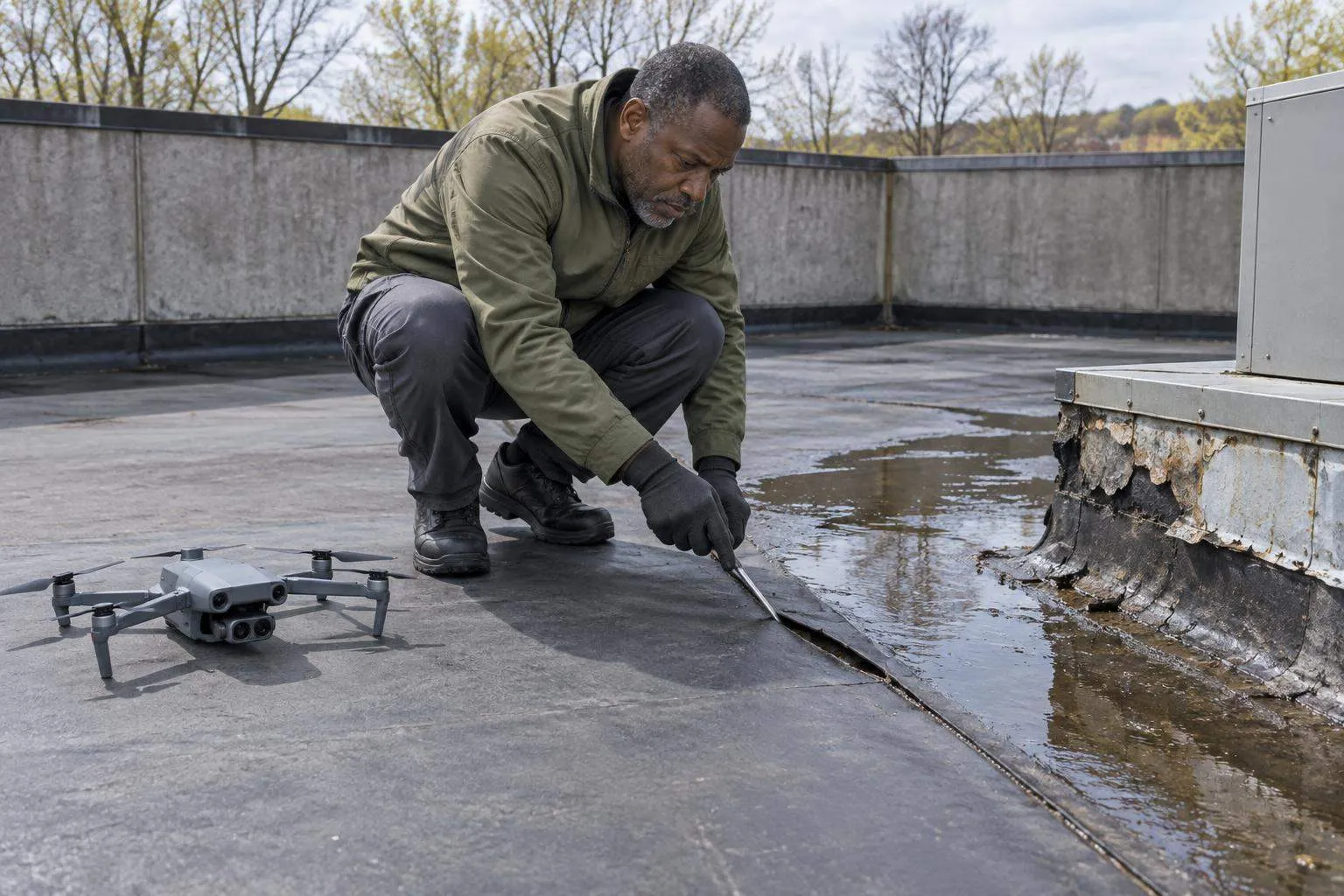
ICON Inspection Services runs HD camera inspections for steep and complex structures — the kind of roofs where sending a person up creates more liability than the inspection is worth. Their residential pricing starts at $300 for drone-only components and $375 for a full home inspection. That’s a reasonable entry point for a post-storm assessment.
Nobody tells you this: after a significant weather event in Houston, turnaround times for traditional roof inspectors collapse. Drone operators with their own equipment (not rented gear) can mobilize faster. THE FUTURE 3D runs owned fleets — not rentals — and advertises 24/7 operations across all 50 states, which matters when you’re trying to document storm damage quickly for an insurance claim.
Pro Tip:If you’re filing an insurance claim after a hail event, ask your drone inspector specifically about geotagged deliverables. Insurers increasingly want GPS-tagged damage markers, not just a PDF with photos. Confirm the output format before you book.
The Industrial Side: Where Houston Is Unique
FlyGuys deploys LiDAR, photogrammetry, and multispectral sensors for Houston industrial sites — oil refineries, offshore rigs, large-scale infrastructure. Their FAA-licensed pilots generate 3D models directly from sensor data, which means you’re not just getting pictures; you’re getting a digital twin you can measure against.
THE FUTURE 3D reports survey-grade accuracy of ±2–4mm for drone-captured data. For infrastructure condition assessments, that’s the difference between a useful report and an expensive guess.
Helios Visions expanded into Texas in 2022, bringing a specialty in bridges and viaducts. Their core use case — reducing downtime by eliminating the need for lane closures and scaffolding — maps directly onto the aging highway infrastructure surrounding Houston’s port and industrial corridors.
The economics here are straightforward: one day of scaffolding for a bridge inspection can cost more than the entire drone engagement. Scale that across a maintenance program and the ROI math is obvious.
What to Ask Before You Hire
Before any engagement, confirm:
- FAA Part 107 certification — not optional, not implied. Ask for the certificate number.
- Liability insurance — minimum $1M general liability for commercial work; more for industrial.
- Equipment ownership — rented gear means less institutional knowledge of the sensor package.
- Deliverable format — raw photos, processed orthomosaic, 3D model, thermal overlay, or written report? Know what you’re paying for.
- Turnaround time — standard is 24–48 hours for processed reports; ask specifically.
For a deeper look at evaluation criteria, see The Complete Guide to Drone Inspection Services.
Pricing Reality in the Houston Market
Reality Check:There is no standard pricing for drone inspections in Houston. Residential roofs run $300–$375. Large infrastructure projects start at $1,000 and routinely exceed $100,000 for complex deliverables. Anyone giving you a ballpark without knowing your asset, acreage, and required deliverables is guessing.
Industrial operators universally use project-based pricing, not hourly rates. That’s actually a feature — it aligns incentives. The operator needs to scope accurately; you need a complete deliverable. Hourly billing on a complex site is a recipe for scope creep.
Practical Bottom Line
Houston’s drone inspection market is mature enough to handle everything from a single-family roof to a multi-facility refinery inspection program. The failure mode isn’t lack of options — it’s mismatching the provider to the project.
Your next steps:
- Categorize your asset: residential/commercial roof, facade, bridge/infrastructure, or industrial facility
- Define your deliverable: photos, 3D model, thermal report, orthomosaic map, or written assessment
- Browse the Houston drone inspection directory and filter by specialty
- Get at least two quotes and compare deliverable format, not just price
- Confirm FAA certification and insurance before signing anything
The scaffolding company will always be happy to take your money. The drone operator gets you better data in less time, with no one on a ladder. That trade is almost always worth making.
Done reading? Get quotes from drone inspection services in Houston.
Takes about a minute. Free, no obligation; providers reply to you directly.
Popular cities:
Nick built this directory to help general contractors and risk managers find FAA Part 107-certified drone inspectors without wading through generalist photography outfits that added a drone as an upsell — a conflict of interest he ran into when trying to document storm damage on a commercial roof and couldn’t tell which operators carried the commercial liability insurance to back their reports.