Get free quotes from drone inspection near you
Takes about a minute. Free, no obligation; providers reply to you directly.
A drone inspector I know — call him Marcus — told me he spent three months cold-calling utility companies before landing his first transmission line contract. His pitch kept getting bounced to procurement. Then he dropped a single number in an email: $18 billion. That’s what the drone inspection market is worth in 2026. Procurement forwarded it to the VP of Operations the same day.
Numbers open doors. Here are the real ones.
The Short Version:The drone inspection market is worth roughly $18–34 billion in 2026 (depending on how you slice the segments), growing at 17–40% annually depending on the subsegment. North America leads with about 35% of global share. Energy, utilities, and infrastructure are the highest-growth verticals. AI-driven autonomous inspections are eating the market from the bottom up.
Key Takeaways
- The drone inspection and monitoring market hits $18.44 billion in 2026, up 19% year-over-year
- North America holds 34.52% of global market share for inspection and maintenance
- Energy and utilities is the hottest vertical at 14.5% CAGR through 2033
- AI analytics and autonomous (BVLOS) operations are shifting competition from “who can fly” to “who can deliver data”
Market Size: Depends Which Number You Need
Here’s what most people miss: “drone inspection market” means different things depending on the research firm, and journalists get this wrong constantly.
| Segment | 2026 Size | 2025 Size | CAGR | Projected |
|---|---|---|---|---|
| Inspection & Monitoring | $18.44B | $15.5B | 19.0% | $36.94B by 2030 |
| Inspection & Maintenance | $10.11B | $8.43B | 16.9% | $35.35B by 2034 |
| Drone Services (all) | $34.02B | — | 39.5% | $349.79B by 2033 |
| Overall Drone Market | $69B | — | 7.9% | $147.8B by 2036 |
The $18.44B figure (inspection and monitoring) is the tightest definition and most useful for practitioners. The $34B drone services number includes delivery, photography, mapping, and other non-inspection work. Platform services — repeatable automated missions — hold 77% of that services market, which tells you where the money is concentrating.
Nobody tells you this, but the segment definitions matter more than the headline number when you’re pitching to an investor or client.
Regional Distribution
Reality Check:“North America leads” is a phrase that appears in every market report. What it actually means: the US regulatory environment (FAA Part 107, the emerging Shielded Corridors program for transmission lines) has created a cleaner commercial pathway than most markets. That’s a moat — and it’s eroding as other regions catch up.
| Region | 2026 Market Size | Growth Rate | Notes |
|---|---|---|---|
| North America | ~34.52% share | Fastest overall | FAA framework, utility/oil & gas concentration |
| Asia Pacific | $2.93B | 17.5% | Highways, rail, power in India ($0.54B alone) |
| Middle East & Africa | $2.6B | Grows to $7.65B by 2031 | Infrastructure buildout driving demand |
Asia Pacific is the one to watch. India’s $0.54 billion slice of the market in 2026 is being driven by highway and rail inspection — the government is spending aggressively on infrastructure, and drones are cheaper than human crews at scale. That pattern repeats across Southeast Asia.
Where the Growth Is Coming From
The energy transition is the single biggest driver no one in the trade press is talking about loudly enough.
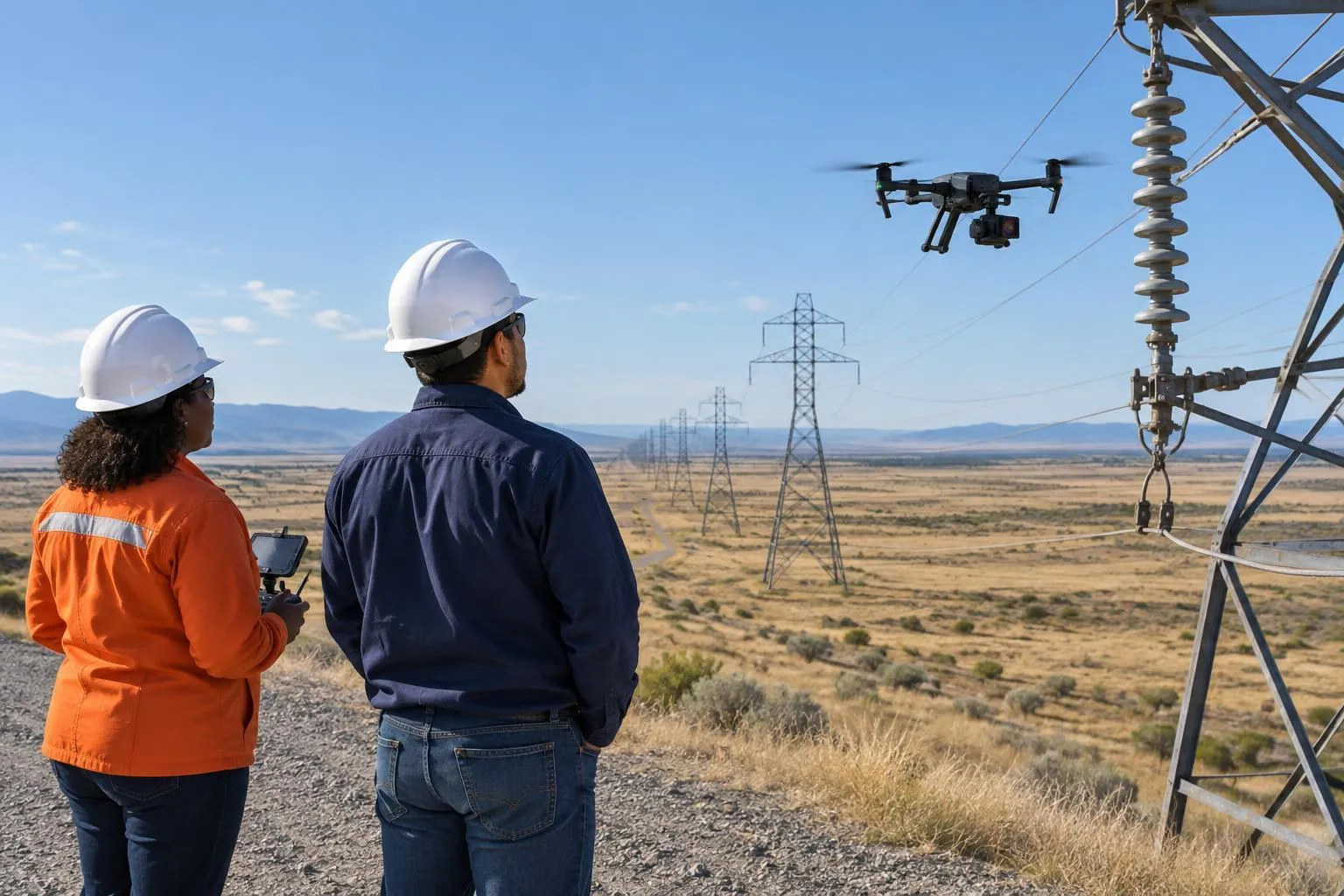
Wind turbines need blade inspections every 1–3 years. Solar arrays need thermographic surveys after installation and after major weather events. Transmission lines need regular corridor surveys as grid capacity expands to meet EV demand. The energy and utilities vertical is growing at 14.5% CAGR from 2025 to 2033 — faster than the broader market.
IDTechEx projects inspection and maintenance will exceed 25% of all commercial drone revenue by 2030. That’s a significant shift from where the market was five years ago, when agriculture and photography dominated.
Pro Tip:If you’re positioning a drone inspection business right now, the pitch that lands is not “we fly drones.” It’s “we deliver asset health data with a 48-hour turnaround and no scaffolding.” The buyer cares about downtime reduction and safety compliance, not your aircraft.
The Tech Shift That’s Repricing the Market
Three converging changes are compressing margins at the commodity end while expanding them at the top:
AI-automated defect detection removes the human bottleneck in image analysis. A technician reviewing 4,000 thermal images from a solar farm used to take days. AI flags anomalies in minutes. Operators who built their business around “experienced reviewers” are getting squeezed.
Drone-in-a-box systems enable fully automated inspection workflows — the drone launches, flies a pre-programmed route, docks, charges, and uploads data with zero human intervention on-site. For utilities managing hundreds of miles of transmission line, this is transformative.
BVLOS (Beyond Visual Line of Sight) operations at scale are the regulatory unlock that turns individual jobs into infrastructure contracts. The FAA’s Shielded Corridors framework is specifically designed for transmission line operations — it’s the clearest signal yet that regulators understand where the commercial value is.
The market is bifurcating: low-margin single-site jobs on one end, high-value recurring data contracts on the other. The practitioners winning in 2026 are building toward the latter.
What This Means for Practitioners
The $18 billion number is real, but it’s unevenly distributed. Here’s the honest breakdown of where operators are actually capturing value:
- Roofing and insurance inspections: High volume, competitive pricing, commoditizing fast
- Utility and energy infrastructure: Longer sales cycles, but recurring contracts worth 10–100x a residential roof job
- Oil and gas / industrial facilities: Requires specialized sensors (thermal, gas detection, LiDAR) — higher barrier, higher margin
- Construction progress documentation: Steady demand, general contractors increasingly require it by contract
The complete guide to drone inspection services covers operator requirements, equipment costs, and how to get your first commercial contract — worth reading alongside this data.
Practical Bottom Line
The market is large, growing fast, and actively consolidating around operators who can deliver data — not just flights. Three things to do with this information:
- Use the $18.44 billion figure when pitching commercial clients or applying for contracts. It signals industry maturity and justifies the buyer’s decision to use drones over traditional methods.
- Target energy and utilities if you’re choosing a vertical. 14.5% annual growth, regulatory tailwinds, and high contract values make it the strongest long-term bet.
- Invest in your data delivery pipeline before your equipment. The operators losing business in 2026 are losing it on turnaround time and report quality — not drone specs.
The market isn’t asking “can you fly?” anymore. It’s asking “what can you tell me about my assets, and how fast?”
Done reading? Get quotes from drone inspection services near you.
Takes about a minute. Free, no obligation; providers reply to you directly.
Popular cities:
Nick built this directory to help general contractors and risk managers find FAA Part 107-certified drone inspectors without wading through generalist photography outfits that added a drone as an upsell — a conflict of interest he ran into when trying to document storm damage on a commercial roof and couldn’t tell which operators carried the commercial liability insurance to back their reports.