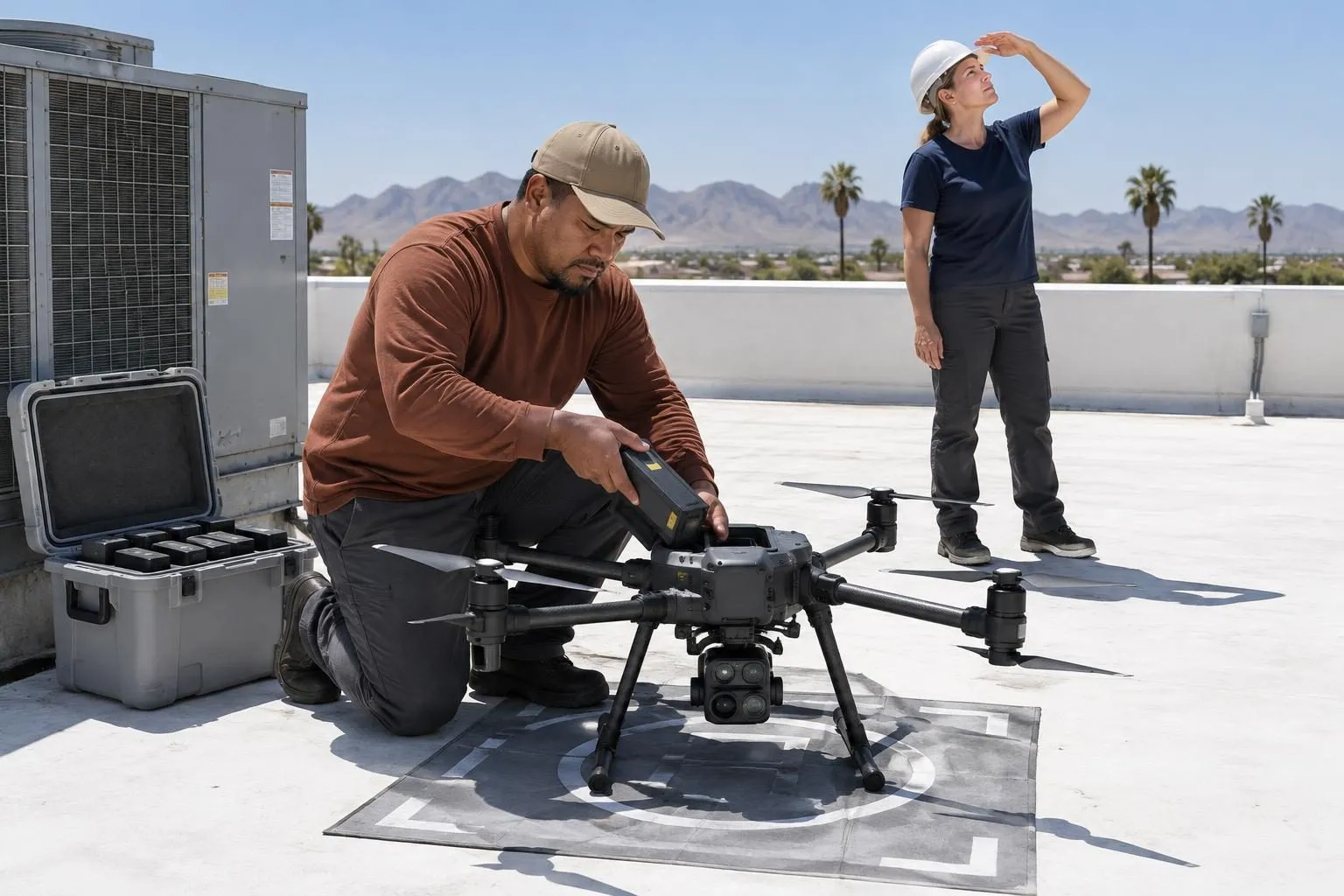
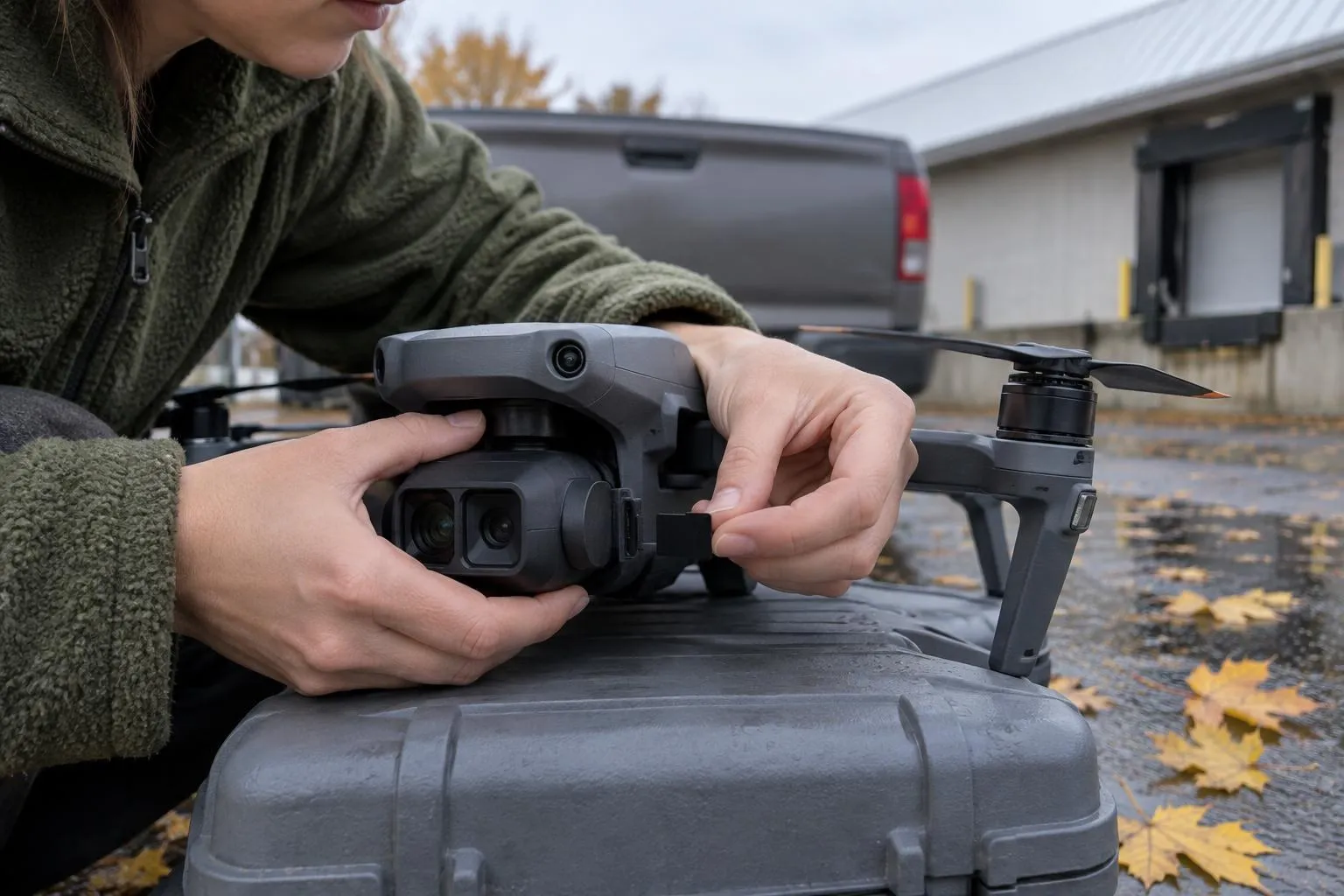
Get free quotes from drone inspection near you
Takes about a minute. Free, no obligation; providers reply to you directly.
A client emailed me once asking if I could recommend a drone inspector. The guy they’d found online had a great portfolio, responsive quotes, and a very professional website. He also had zero FAA certification — something I only discovered after digging into his “About” page. The client had no idea that mattered. Most people don’t.
That gap — between what the credential signals and what the industry assumes it guarantees — is exactly why this article exists.
The Short Version:The FAA Part 107 Remote Pilot Certificate is the legal baseline for any commercial drone operation in the U.S. Without it, you’re breaking federal law. With it, you’re legally compliant — but not necessarily any good. Knowing the difference will save you from hiring the wrong person.
Key Takeaways
- Part 107 is federally required for commercial drone work — no exceptions, no gray areas
- The certificate costs about $175 and takes a knowledge test, not a flight test
- It expires every 24 months and requires free recurrent training to maintain
- Certification proves legal compliance; it does not prove skill, equipment quality, or deliverable quality
What Part 107 Actually Is
The FAA’s Small UAS Rule (Part 107) created a standardized credential called the Remote Pilot Certificate with a small UAS rating. It’s the legal authorization to operate a drone commercially in the United States — roof inspections, tower surveys, insurance loss documentation, all of it.
Here’s the process, stripped of the bureaucratic fog:
- Pass the Airman Knowledge Test (a 60-question exam covering 7 knowledge areas)
- Complete FAA Form 8710-13 through the IACRA electronic system
- Clear a TSA security background check
- Print a temporary certificate from IACRA while the permanent one arrives by mail
The test costs roughly $175, requires no prior flight experience, and involves zero practical flying. You can fail it and retake it after 14 days — though you’ll pay the fee again.
That last point is worth sitting with: there is no flight portion of this exam.
The Knowledge Test: What It Actually Covers
The exam spans seven task areas:
| Domain | What It Tests |
|---|---|
| General | Accident reporting, Part 107 compliance |
| Operating Rules | Altitude limits, alcohol use, safe practices |
| Remote Pilot Certification | Eligibility, drug testing policy |
| Waivers | Authorization processes and waiver policy |
| Operations Over People | Flight rules near crowds and moving vehicles |
| Remote Identification (RID) | Broadcasting requirements, product labeling |
| Airspace Operations | Class B/C/D/E airspace authorization |
Knowing these rules matters. But passing this test means someone studied — not that they can fly a 30-lb thermal inspection drone up a 200-foot cell tower without crashing it.
Reality Check:The Part 107 test is closer to a written DMV exam than a pilot’s checkride. It validates regulatory knowledge, not operational competency. A brand-new inspector with a fresh certificate and an experienced aerial photographer with ten years of roof work both carry the same credential.
When Certification Matters (And It Always Matters Legally)
Operating a drone for commercial purposes without a Part 107 certificate is a federal violation — not a gray area, not a technicality. The FAA treats it seriously, and so should anyone hiring drone services.
The controlled airspace piece trips people up. Any drone work in Class B, C, D, or E airspace (near airports, essentially) requires prior ATC authorization on top of the base certificate. An inspector who doesn’t mention this when bidding a job near a regional airport is either uninformed or cutting corners. Neither is good.
Remote Identification (RID) is now a real compliance layer too. Under Part 89, drones must broadcast identification data during flight. If the RID system fails mid-flight, the pilot is legally required to land as soon as practicable — not finish the inspection, not try to troubleshoot. A pilot who doesn’t know this is a liability for whoever hired them.
The certificate is also only valid for 24 months from the date of passing the knowledge test. Recurrence requires completing one of two free FAA online courses. Sounds trivial, but an expired certificate is a lapsed certificate — the operator is no longer legally current.
Pro Tip:Before hiring any drone inspector, ask directly: “Is your Part 107 current, and can you provide your certificate number?” A legitimate operator will give you both without hesitation. You can verify remotely pilot certificates through the FAA’s Airmen Inquiry tool at faa.gov.
When Certification Alone Isn’t Enough
Here’s what most people miss: the industries that use drone inspection services most heavily — utilities, insurers, large general contractors — don’t just screen for Part 107. They screen for it and equipment specs and deliverable formats and insurance.
A thermal inspection of a solar array requires a drone equipped with a calibrated radiometric thermal camera. Part 107 says nothing about equipment. A post-hurricane insurance survey requires geotagged imagery formatted to specific adjuster standards. Part 107 says nothing about deliverables.
The credential is the floor, not the ceiling.
| What Part 107 Verifies | What It Doesn’t Verify |
|---|---|
| FAA regulatory knowledge | Flight hours or practical skill |
| Legal authorization to fly commercially | Equipment quality or calibration |
| Airspace awareness basics | Report format or data standards |
| Recurrent training completion | Insurance coverage or liability limits |
| TSA background check clearance | Industry-specific certifications (e.g., thermography) |
Nobody tells you this when they’re selling you on a “certified” inspector. The word “certified” does a lot of marketing work that the actual credential doesn’t support.
For a fuller picture of what to actually evaluate when hiring, the Complete Guide to Drone Inspection Services covers equipment, deliverables, and vetting criteria beyond the certificate.
The Recurrence Trap
I’ll be honest — this is the part that catches even experienced operators off guard.
The certificate doesn’t auto-renew. There’s no automatic reminder. If you hire someone whose certificate lapsed six months ago because they forgot to complete a free online refresher course, they are operating illegally — and that liability doesn’t stay neatly contained with them.
Two free courses exist for recurrency:
- ALC-677 — for standard Part 107 holders
- ALC-515 — for Part 107 pilots who also hold a current Part 61 flight review
Both are available at FAASafety.gov at no cost. There’s no excuse for lapsing. An operator who has let their certificate expire isn’t just non-compliant — they’re telling you something about how they run their business.
Practical Bottom Line
The FAA Part 107 Remote Pilot Certificate is necessary, easy to verify, and not sufficient on its own. Here’s how to use this information:
If you’re hiring a drone inspector:
- Verify the certificate is current — ask for the certificate number and check faa.gov
- Ask about airspace authorization for your specific site location
- Confirm RID compliance is part of their standard operating procedure
- Treat certification as a baseline, then evaluate equipment, insurance, and sample deliverables separately
If you’re evaluating credentials on a provider profile: Look for the certificate alongside evidence of actual work — thermal overlays, measurement reports, geotagged photo sets. Those are what you’re actually paying for.
The certificate proves they’re legal. Their portfolio proves they’re competent. You need both.
Done reading? Get quotes from drone inspection services near you.
Takes about a minute. Free, no obligation; providers reply to you directly.
Popular cities:
Nick built this directory to help general contractors and risk managers find FAA Part 107-certified drone inspectors without wading through generalist photography outfits that added a drone as an upsell — a conflict of interest he ran into when trying to document storm damage on a commercial roof and couldn’t tell which operators carried the commercial liability insurance to back their reports.