Get free quotes from drone inspection near you
Takes about a minute. Free, no obligation; providers reply to you directly.
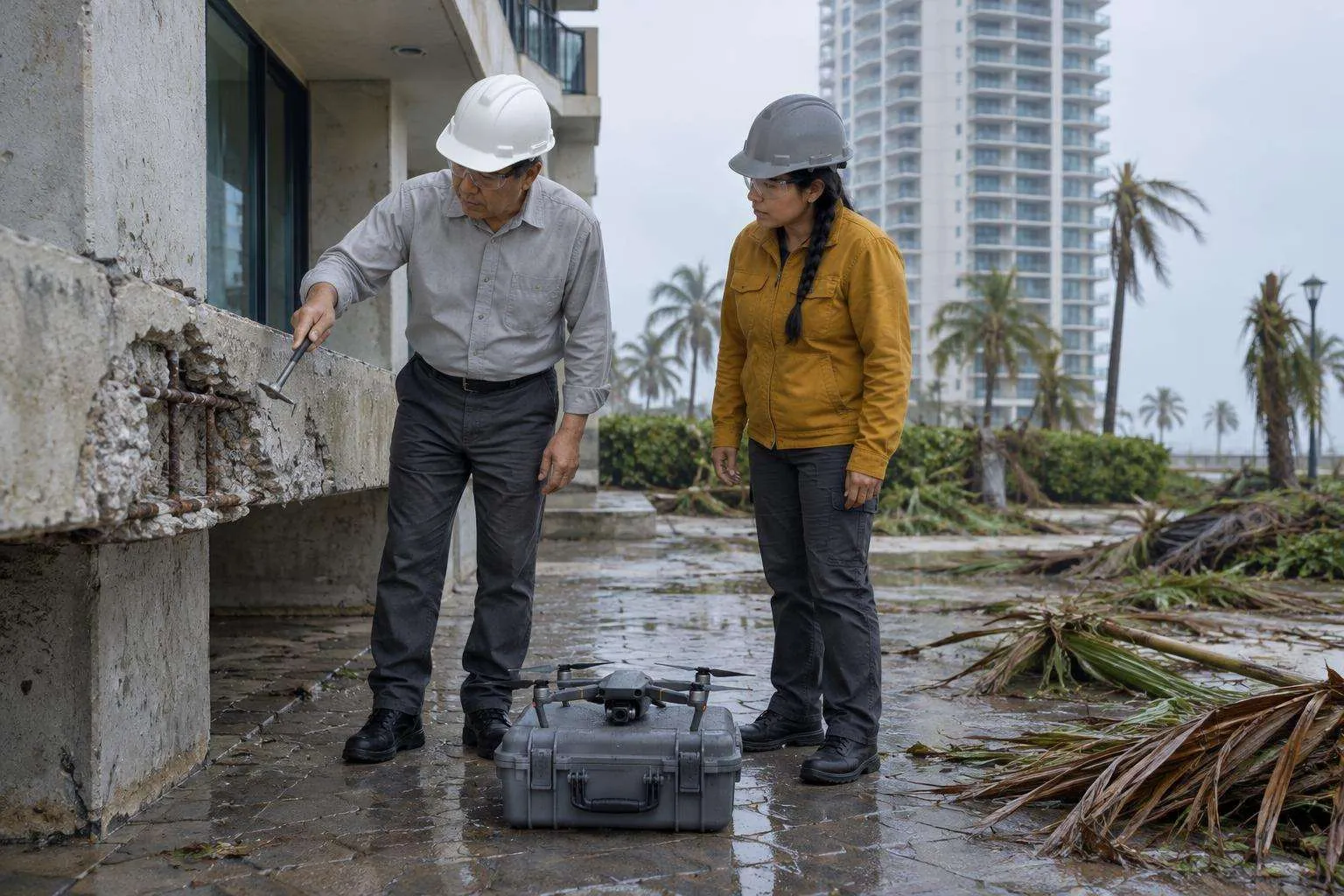
A property manager I know hired a drone company to inspect her 28-story Miami high-rise after Hurricane Ian. The pilot showed up with a Part 107 certificate, flew beautiful footage, delivered a 200-photo PDF — and her insurer rejected the entire report. The building’s structural engineer had never seen it. Her attorney had to explain to the condo board why they’d just paid for footage that legally meant nothing.
That story isn’t unusual. The drone inspection industry has a credential problem — not because certifications don’t matter, but because the wrong people are asking the wrong questions about which ones matter.
The Short Version:FAA Part 107 is the floor, not the ceiling. For simple roofs and insurance docs, it’s often enough. For anything touching structural compliance, bridge safety, tank integrity, or legal proceedings, the credential that matters isn’t the pilot’s — it’s the engineer’s or inspector’s reviewing the data. Hire accordingly.
Key Takeaways
- FAA Part 107 is legally required for all commercial drone operations in the U.S. — no exceptions
- Drone footage alone doesn’t satisfy NBIS, API 653, or Florida SB-4D compliance; a certified inspector must interpret the data
- Thermal imaging adds 20–30% to cost but catches moisture intrusion that can run tens of thousands to remediate
- The real credential gap isn’t flight certification — it’s inspection expertise
The Credential Landscape, Honestly
Here’s what most people miss: there are two entirely separate competency tracks in drone inspection, and vendors routinely conflate them.
Track 1: Flight credentials. FAA Part 107 Remote Pilot Certificate. Sixty-question exam covering airspace, weather, regulations, and safety. Mandatory for any paid commercial drone operation. Non-negotiable baseline. Near airports, operators also need LAANC authorization. This credential tells you someone can legally fly and won’t drift into a flight path.
Track 2: Inspection credentials. This is where the real variation lives. A certified bridge inspector (NBIS), an API 653-qualified tank inspector, an ASNT Level II/III NDT technician — these are the people who can look at drone-captured thermal data or wall-loss measurements and tell you what they mean. They can sign reports that hold up in court, satisfy insurance requirements, and comply with regulatory mandates.
The pilot who flies the drone and the inspector who evaluates what the drone found are often two different people. When they’re the same person, you’re looking at a genuinely rare dual-qualified professional — and you should pay accordingly.
When Credentials Are Non-Negotiable
Florida SB-4D requires milestone inspections for buildings 3+ stories at 25 years (coastal) or 30 years (inland). Miami-Dade adds a 40-year recertification layer. Every single one of those reports requires a Professional Engineer stamp. Drone footage submitted without PE certification is not just incomplete — it’s invalid. The building still fails compliance.
API 653 governs above-ground storage tanks. External visual inspections every 5 years, ultrasonic thickness measurements every 15. The UT data a drone captures means nothing without a certified API 653 planner and evaluator reviewing it. The drone is a data collection tool. The certified inspector is the instrument of legal accountability.
Same story with bridges: drone imagery doesn’t satisfy NBIS requirements without a certified bridge inspector’s involvement in interpreting structural conditions.
Reality Check:If a vendor quotes you a bridge inspection, tower assessment, or tank integrity survey and their pitch focuses heavily on their drone equipment rather than their inspection certifications, that’s your cue to ask harder questions.
When Part 107 Genuinely Is Enough
Not every inspection is load-bearing (pun intended). Insurance documentation after a hailstorm? A residential roof assessment for a property transaction? Construction progress photos for a general contractor? Part 107 plus a decent RGB camera is legitimately sufficient for a huge slice of the market.
The problem isn’t that uncertified-inspector work is inherently bad — it’s that buyers often don’t know which category their job falls into until they’re already holding a report their insurer or engineer won’t accept.
Credential Comparison by Inspection Type
| Inspection Type | Minimum Flight Credential | Inspection Credential Needed | Report Can Be Compliance-Valid? |
|---|---|---|---|
| Residential roof / insurance doc | FAA Part 107 | None required | Yes (for most insurers) |
| Solar array thermal | FAA Part 107 | Thermal interpretation training | Depends on insurer |
| Commercial roof (SB-4D / PE report) | FAA Part 107 | Licensed PE review + stamp | Only with PE stamp |
| Bridge inspection (NBIS) | FAA Part 107 | Certified bridge inspector | Only with NBIS inspector |
| Storage tank (API 653) | FAA Part 107 | API 653-certified planner/evaluator | Only with API certification |
| Power line / transmission tower | FAA Part 107 | Utility-specific safety training | Varies by utility |
| NDT / wall-loss measurement | FAA Part 107 | ASNT Level II/III | Only with ASNT certification |
The Thermal Imaging Caveat
Thermal adds 20–30% to base inspection cost. That sounds like a premium for a gadget. It isn’t. Moisture intrusion that doesn’t show up on RGB imagery can cost tens of thousands to remediate — and the longer it goes undetected, the worse the number gets. But thermal data is only valuable if the person reviewing it knows what they’re looking at. A thermal anomaly on a flat roof is not self-explanatory. An anomaly on a utility transformer is not self-explanatory either.
Pro Tip:When evaluating thermal inspection vendors, ask for a redacted sample report. If the report just shows images with colored hotspots and no interpretation, you’re paying for photography. A quality thermal report explains what the anomaly indicates, probable cause, and recommended action.
The Red Flags That Actually Matter
The industry has gotten good at looking certified. Here’s what separates real credentialing from credential theater:
- No Part 107 — illegal, full stop
- Insurance below $1M liability — insufficient for commercial asset work
- No PE-stamped reports for compliance work — a problem you’ll discover at the worst time
- Vague pricing before site assessment — reputable providers quote after understanding the asset
- No sample reports — if they can’t show you their work, there’s a reason
- No references from similar asset types — flying a roof and flying a chemical storage tank are not the same job
Practical Bottom Line
Before you hire, ask two questions:
- Is your pilot FAA Part 107 certified with $1M+ liability insurance?
- Who is the certified inspector reviewing and signing off on the data interpretation — and what are their credentials for this specific asset type?
For simple visual documentation, question one is often sufficient. For anything touching compliance, structural integrity, or legal liability, question two determines whether the report is worth the paper it’s printed on.
The drone is the camera. The certified inspector is the expert. You need both.
For a broader overview of the industry, start with The Complete Guide to Drone Inspection Services. If you’re budgeting a project, the breakdown of what different inspection types actually cost is worth reading before you request your first quote.
Done reading? Get quotes from drone inspection services near you.
Takes about a minute. Free, no obligation; providers reply to you directly.
Popular cities:
Nick built this directory to help general contractors and risk managers find FAA Part 107-certified drone inspectors without wading through generalist photography outfits that added a drone as an upsell — a conflict of interest he ran into when trying to document storm damage on a commercial roof and couldn’t tell which operators carried the commercial liability insurance to back their reports.