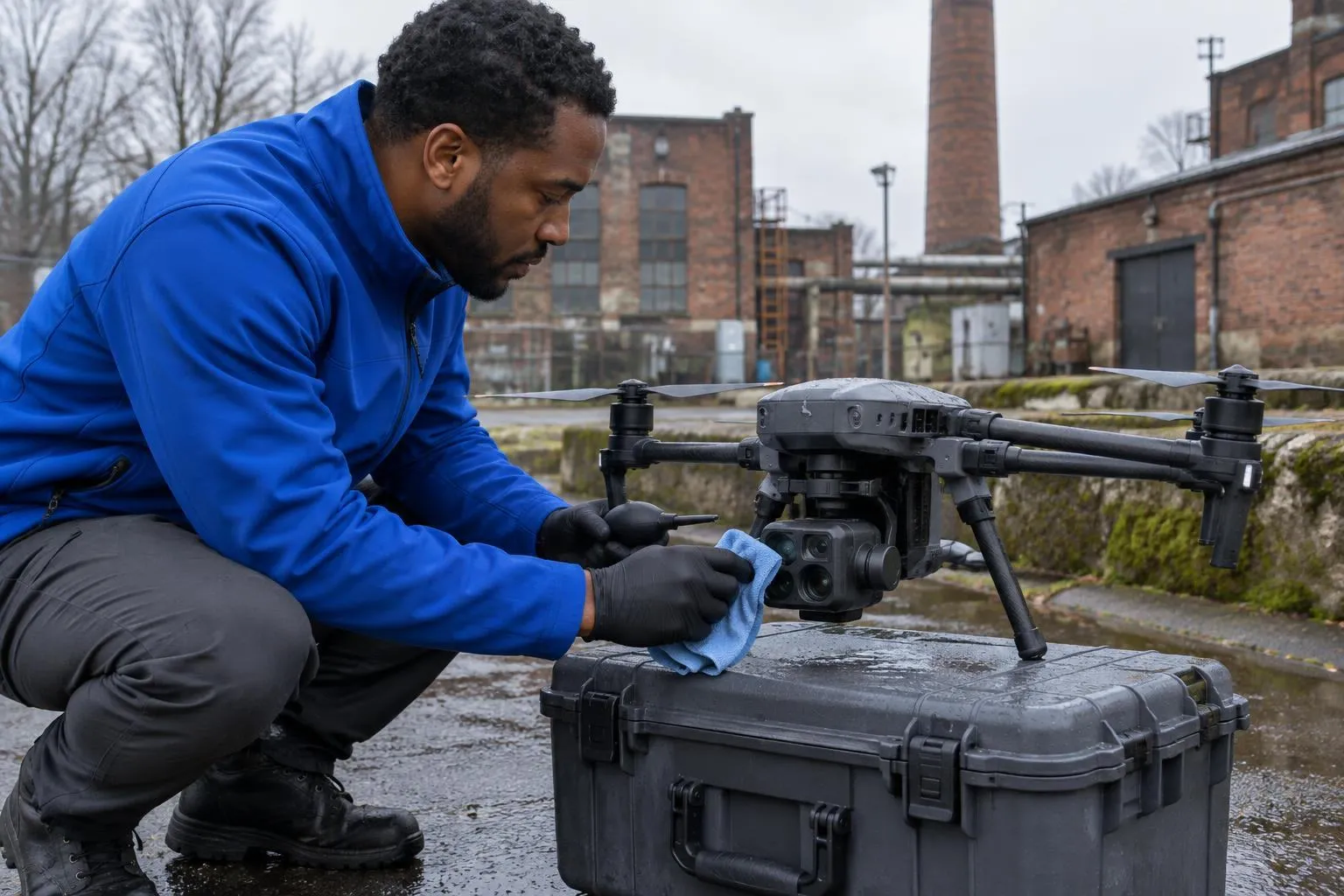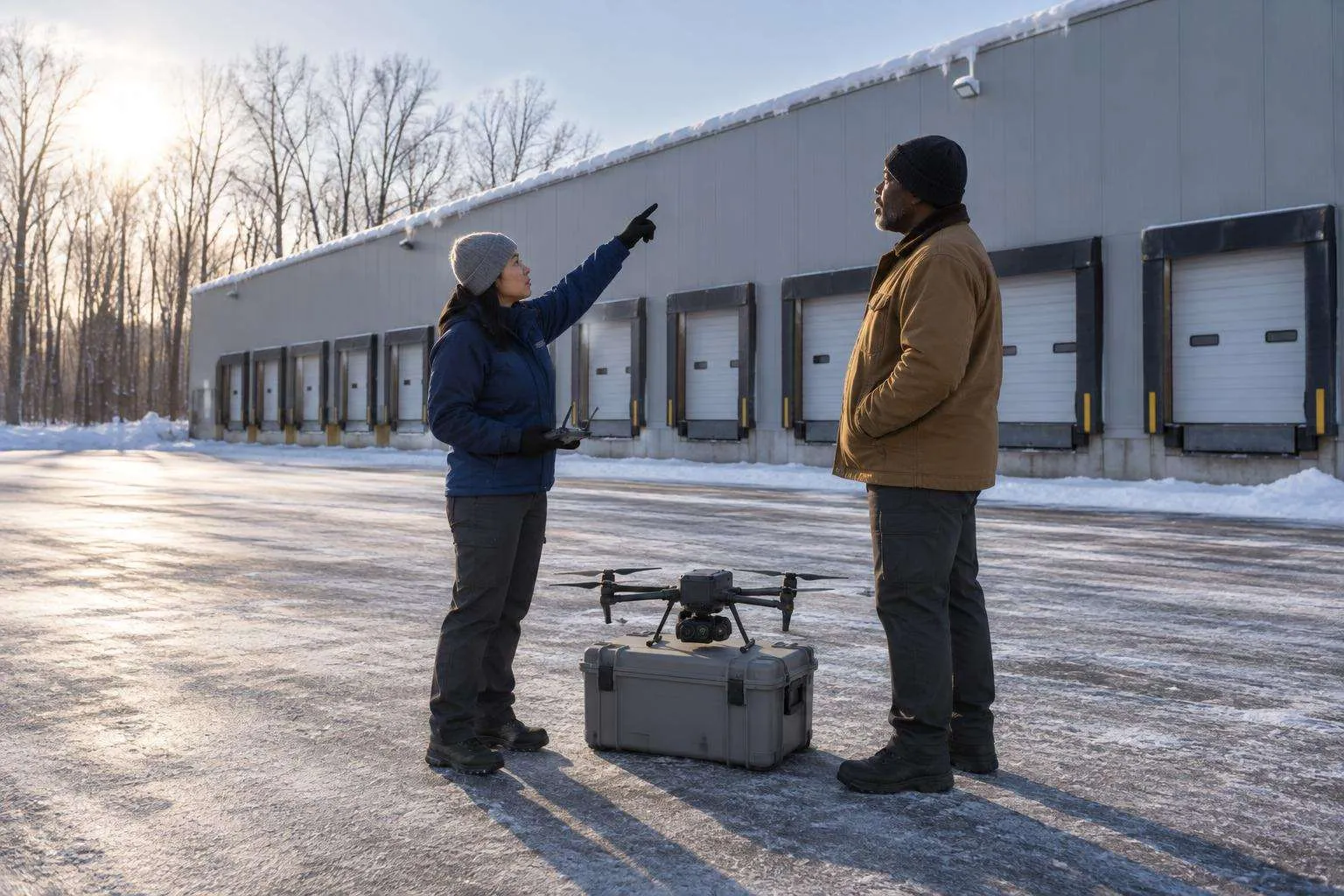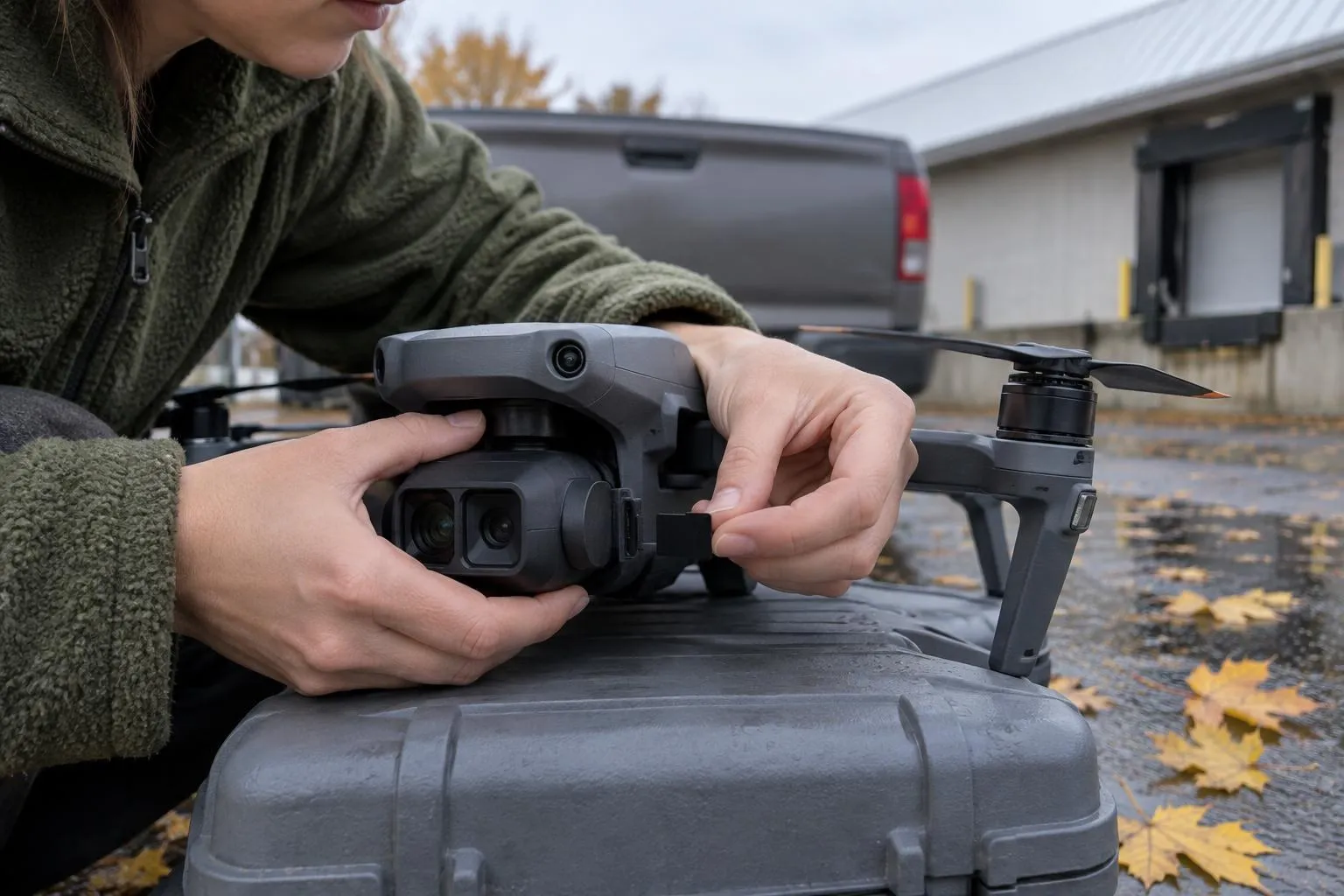
Get free quotes from drone inspection near you
Takes about a minute. Free, no obligation; providers reply to you directly.
A drone inspection project manager I know spent three weeks going back and forth with a facilities client over a single line item on a proposal: “UAV inspection services.” The client kept asking why the quote also listed “drone inspection services” as a separate line. Were they being double-billed? Were these actually different things? The proposal nearly died over a terminology misunderstanding — not a scope disagreement, not a price dispute. A word.
Nobody in the industry talks about this confusion openly, but it costs real money and real deals.
The Short Version:“Drone” and “UAV” mean the same thing. You are not being sold two different services when you see both terms — it’s marketing language, not a technical distinction. The only time “both” matters is when a hybrid workflow combines aerial drone passes with manual close-up verification, which is a best-practice method, not a product upsell.
Key Takeaways:
- Drone = UAV = UAS. These are interchangeable terms for the same aircraft.
- The real comparison worth making is aerial inspection vs. manual inspection — and the data strongly favors drones for speed, safety, and cost.
- A hybrid approach (drone for coverage + manual for tactile verification) is the industry best practice, not two separate service categories.
- The global drone inspection market is growing fast — $9.94 billion in 2024, projected to nearly double to $18.94 billion by 2028 — which means more vendors, more jargon, and more reasons to know what you’re actually buying.
The Terminology Problem Nobody Warns You About
Here’s what most people miss: the Federal Aviation Administration doesn’t use the word “drone” in its regulatory framework at all. The FAA calls them Unmanned Aircraft Systems (UAS), which encompasses the aircraft itself (the UAV — Unmanned Aerial Vehicle) plus its ground control systems and data links. The word “drone” is consumer shorthand that stuck.
So when a vendor markets “UAV inspection services” vs. “drone inspection services,” they’re describing the same FAA Part 107-certified pilot, the same commercial aircraft, and the same deliverables. The framing is a branding choice — sometimes it signals a more technical or enterprise-oriented positioning, sometimes it’s just what their SEO consultant told them to write.
The villain here isn’t the vendor — it’s the jargon. Buying decisions get delayed, proposals get questioned, and buyers lose confidence in providers over a distinction that doesn’t exist.
Reality Check:If a vendor tries to sell you a “drone inspection package” and a “UAV inspection package” as genuinely separate line items with different scopes, ask them to explain the technical difference in writing. There isn’t one. That’s your signal to keep shopping.
What You’re Actually Comparing: Aerial vs. Manual
The comparison that does matter isn’t drone vs. UAV. It’s aerial inspection vs. traditional manual inspection — and here the data is unambiguous.
| Factor | Drone/UAV Inspection | Traditional Manual Inspection |
|---|---|---|
| Speed | Up to 10x faster; rooftops in minutes vs. days | Labor-constrained; large sites take weeks |
| Cost | 30–40% reduction; 1–2 operators vs. full crews | Scaffolding, cranes, large teams |
| Safety | Remote operation; no climbing or harnesses | High fall risk on towers, bridges, power lines |
| Accuracy | 97%+ defect detection with sensors + AI | Depends on individual inspector experience |
| Data output | 4K geotagged video, thermal overlays, 3D models | Written notes and manual photographs |
| Coverage | Hundreds of acres per hour | Limited by human endurance and access |
| Wind turbine cost | $300–$769 per turbine | Far higher when cranes and crews are factored in |
Drones win on almost every axis that a procurement manager cares about.
For most commercial inspections — rooftops, cell towers, solar arrays, transmission lines, bridges — a qualified drone operator with the right sensor package (thermal, LiDAR, high-res RGB) will deliver better data faster at lower cost than a rope-access crew. That’s not opinion; it’s why the market is growing at the rate it is.
When “Both” Actually Makes Sense
There is one legitimate scenario where you need more than just a drone pass, and it’s worth understanding clearly.
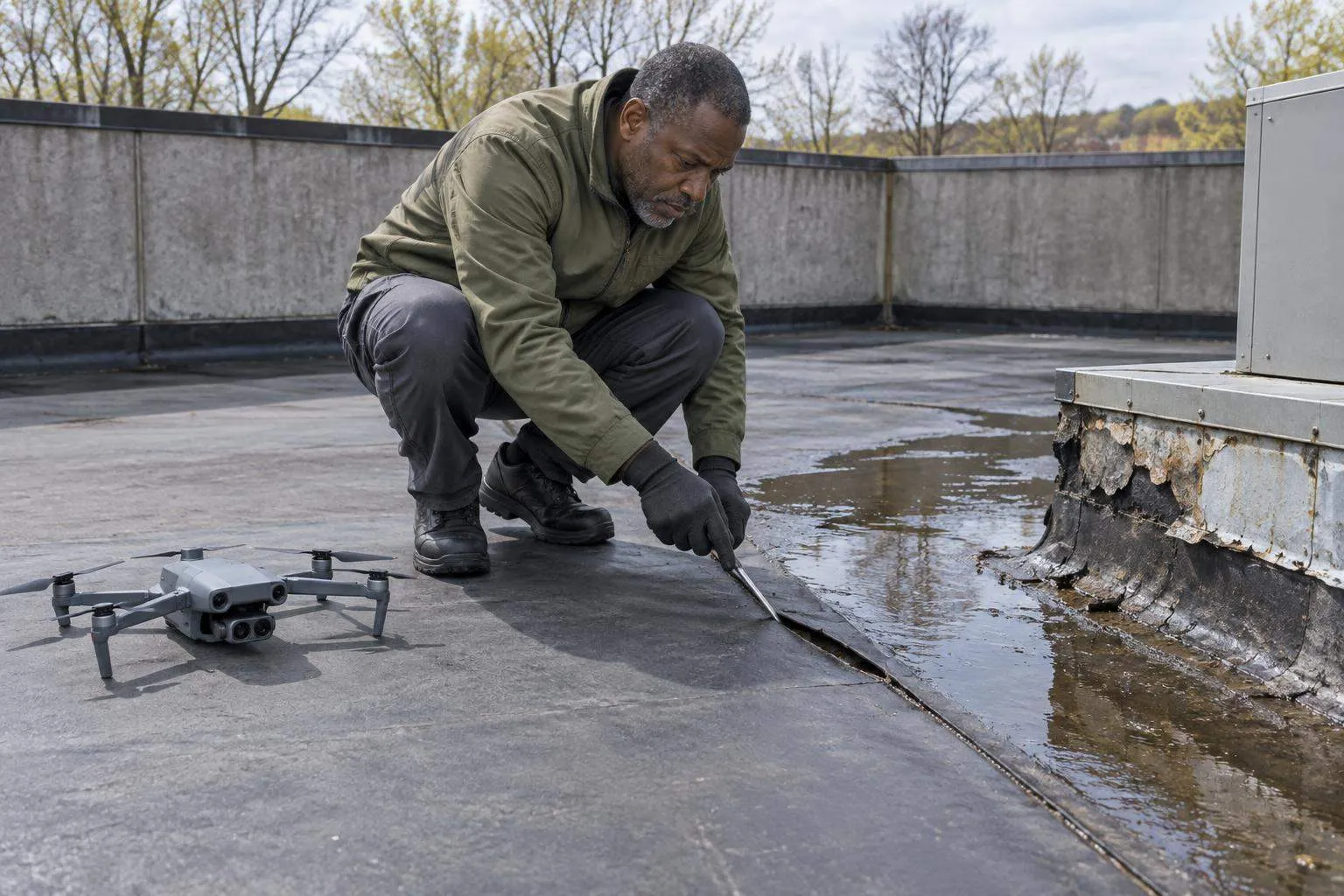
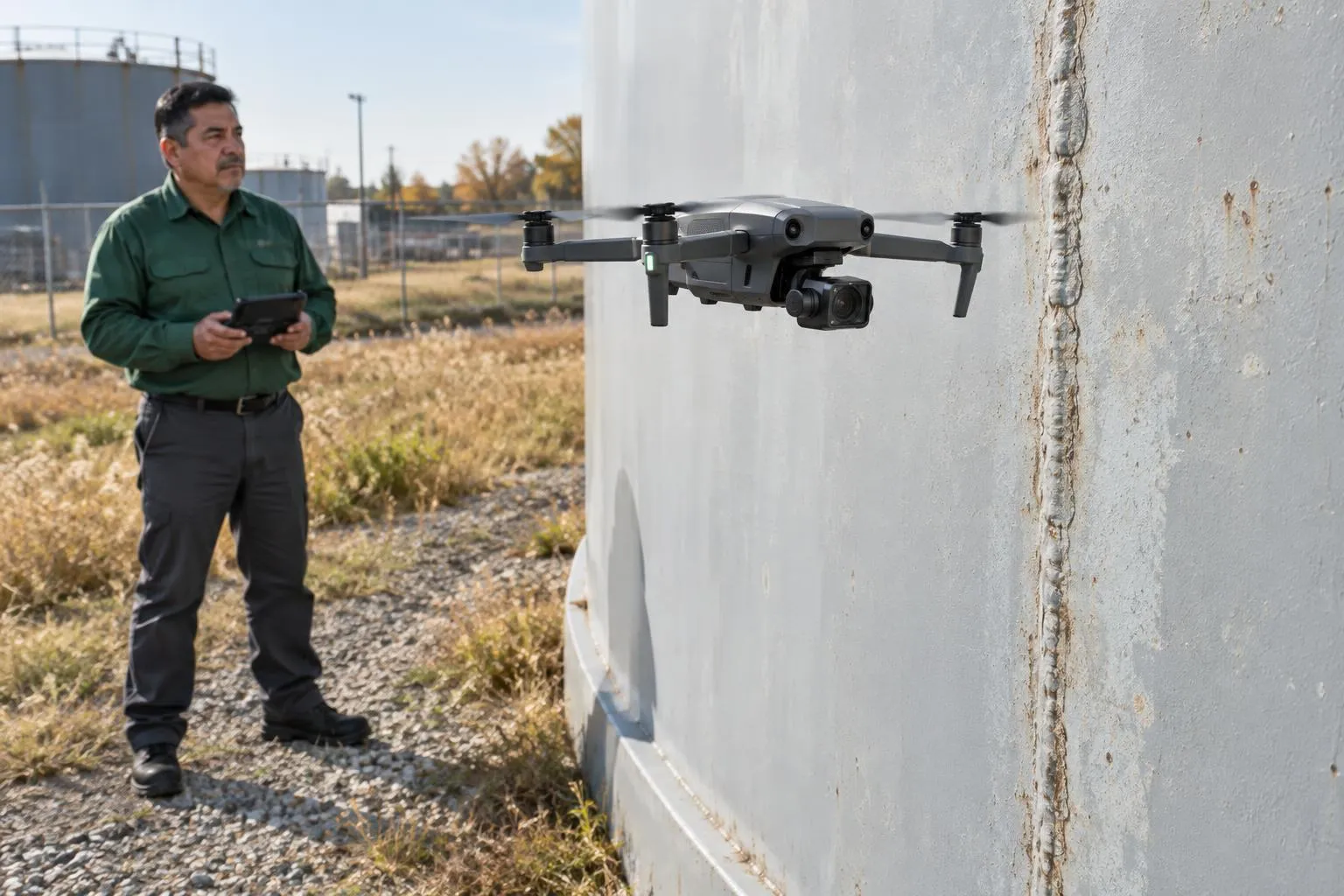
The hybrid workflow. Drones are exceptional at coverage — scanning large areas quickly, catching thermal anomalies, flagging potential defect locations. What they can’t do is physically touch the surface. For critical infrastructure where a missed crack in a weld or delamination in a roofing membrane has real consequences, the best practice is:
- Drone for initial aerial survey — wide-area coverage, thermal anomaly detection, prioritization of problem zones
- Manual close-up verification — inspector physically examines flagged areas, confirms findings, performs any tactile testing
Pro Tip:Ask vendors explicitly whether their proposal includes a hybrid workflow or drone-only. For high-stakes inspections on bridges, wind turbines, or aging industrial facilities, drone-only is faster but hybrid is more defensible when findings go into a maintenance or compliance report.
This is the framework companies like Equinox Drones and Birds Eye Aerial use for energy and infrastructure clients — drone speed combined with human verification where it counts. It’s also why the research consensus is clear: hybrid approaches deliver the strongest ROI, not drones alone.
The drone pass covers hundreds of acres in the time manual inspection teams would still be setting up scaffolding. The manual follow-up focuses human attention only where the aerial data says to look. That’s not two separate services you’re buying — it’s one smart workflow.
What Sensors Actually Differentiate Providers
Since “drone” and “UAV” don’t separate vendors, here’s what actually does: sensor capability.
A drone running a standard RGB camera is a very different tool than one equipped with:
- Thermal imaging — detects heat anomalies in roofing, HVAC systems, electrical infrastructure
- LiDAR — sub-centimeter 3D mapping for structural assessment and BIM integration
- Multispectral cameras — used for solar panel efficiency mapping
- AI defect detection — real-time analysis flagging anomalies during flight rather than in post-processing
Platforms like the DJI Zenmuse H20T combine zoom optics, thermal, and a laser rangefinder in a single payload — meaning one flight captures what used to require multiple passes. That’s the actual technical differentiation worth asking about.
When you’re comparing proposals, skip the drone vs. UAV language entirely. Ask: What sensors are on the aircraft? What does the data deliverable include? How quickly will I receive the report? Those answers separate a quality provider from one riding market terminology.
Practical Bottom Line
If you’re evaluating inspection providers, here’s your three-step filter:
-
Ignore the drone/UAV distinction. It means nothing. Focus on FAA Part 107 certification, sensor payload, and sample deliverables from past projects.
-
Decide if you need hybrid. For compliance-grade inspections on critical infrastructure, budget for a drone survey plus targeted manual follow-up. For insurance documentation, construction progress monitoring, or preliminary surveys, drone-only is usually sufficient and dramatically faster.
-
Get specifics on data output. You want geotagged imagery, thermal overlays if relevant, and a report turnaround time in writing. Cloud-based storage for historical comparison is a sign of a mature operation.
The confusion between “drone” and “UAV” is a solved problem the moment you know to ignore it. The real work is finding a provider with the right sensors, the right certifications, and a workflow that matches your inspection stakes.
For a broader look at what the full engagement looks like from first call to final report, the Complete Guide to Drone Inspection Services covers the end-to-end process. If you’re working in a specific sector, the thermal imaging workflow for rooftop and solar applications is worth understanding before you sign any contract.
The market is growing fast. The terminology is still catching up. Now you’re ahead of it.
Done reading? Get quotes from drone inspection services near you.
Takes about a minute. Free, no obligation; providers reply to you directly.
Popular cities:
Nick built this directory to help general contractors and risk managers find FAA Part 107-certified drone inspectors without wading through generalist photography outfits that added a drone as an upsell — a conflict of interest he ran into when trying to document storm damage on a commercial roof and couldn’t tell which operators carried the commercial liability insurance to back their reports.