Get free quotes from drone inspection near you
Takes about a minute. Free, no obligation; providers reply to you directly.
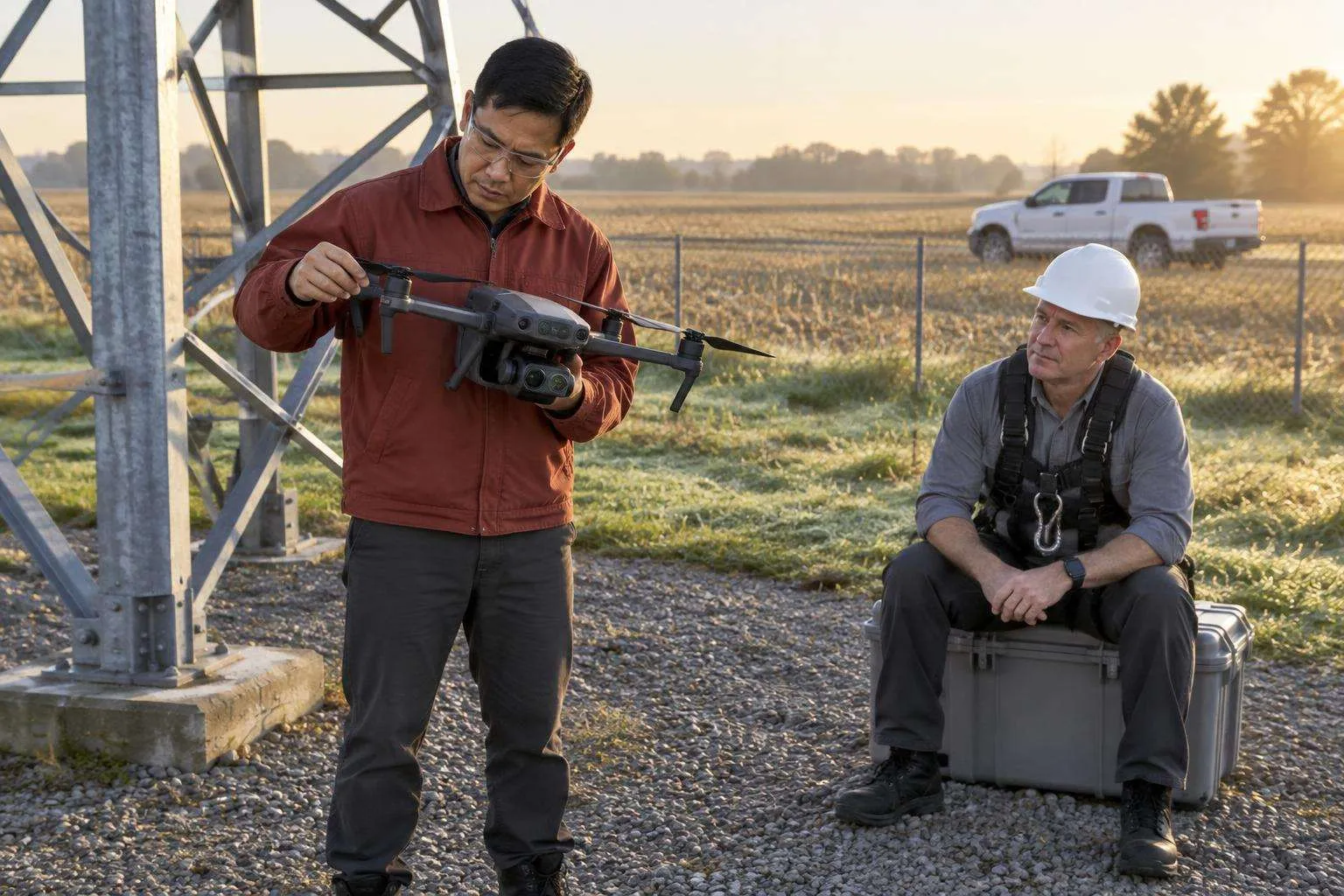
Last spring, a facility manager I know hired a traditional inspection crew to assess a 200-foot cell tower. Three guys, full harness gear, half a day of prep, the whole production. Two weeks later, he found out the company he’d been paying for years had started subcontracting the actual climb to a two-person team with a consumer-grade drone. He paid for in-person. He got remote. And he had no idea.
That story stuck with me because it illustrates the real question underneath this debate: not which method is better in the abstract, but whether you actually know what you’re getting — and whether it matches what your situation demands.
The Short Version:For large, hazardous, or hard-to-access inspections, remote drone service is faster, safer, and cheaper. For anything involving hidden damage, moisture intrusion, or structural nuance you can’t see from the air, you need boots on the ground. The smart move is usually a hybrid — drone first, human second only where the drone falls short.
Key Takeaways
- Drone inspections run up to 10x faster than manual methods, which matters enormously for multi-site or time-sensitive work
- Falls from heights account for 35% of workplace fatalities (OSHA) — remote inspections eliminate that risk entirely for elevated structures
- Drones cannot detect hidden rot, soft decking, moisture paths, or under-shingle damage — a limitation the industry doesn’t advertise loudly enough
- The hybrid model (drone overview + targeted human verification) consistently outperforms either method in isolation
What Remote Drone Inspection Actually Gets You
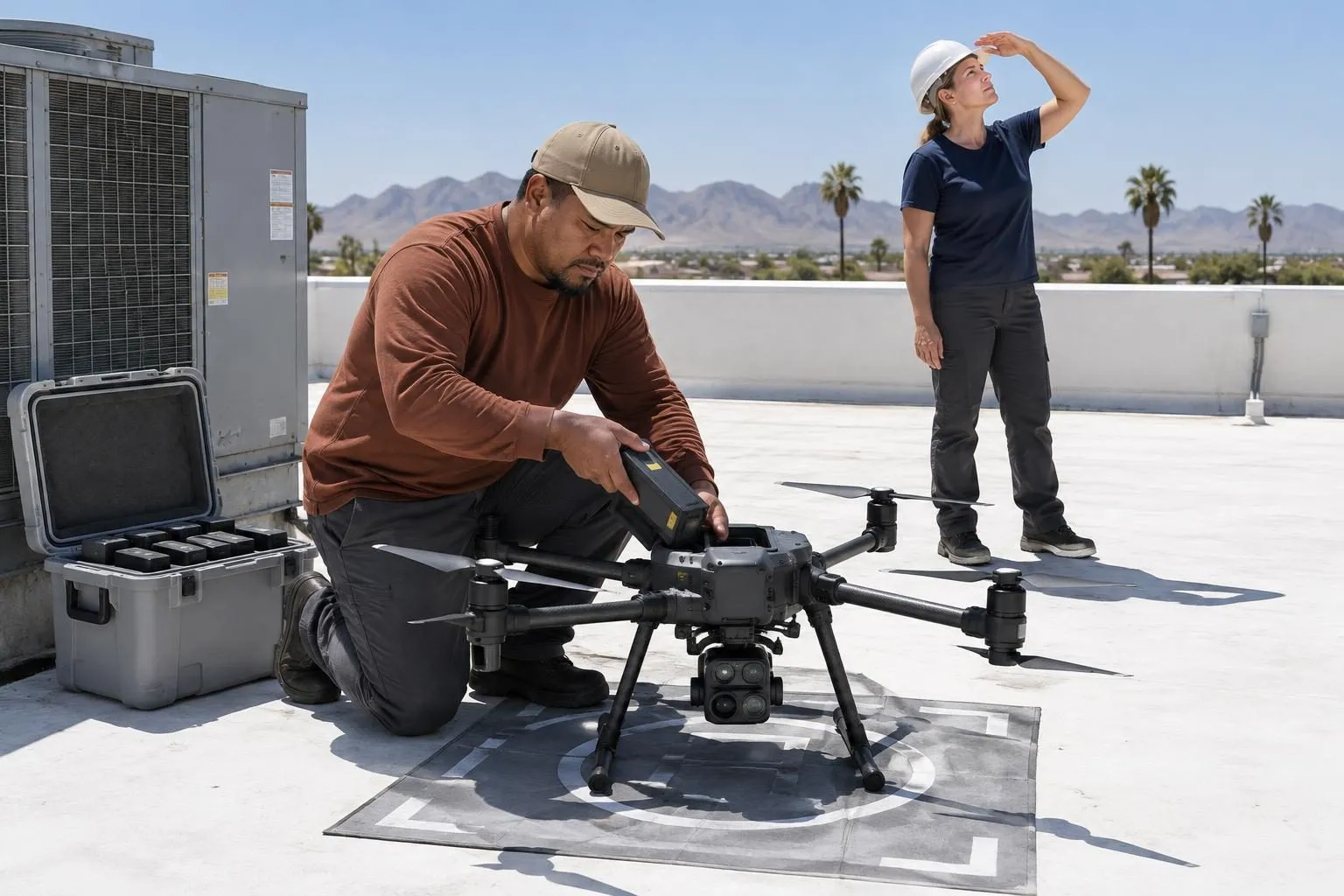
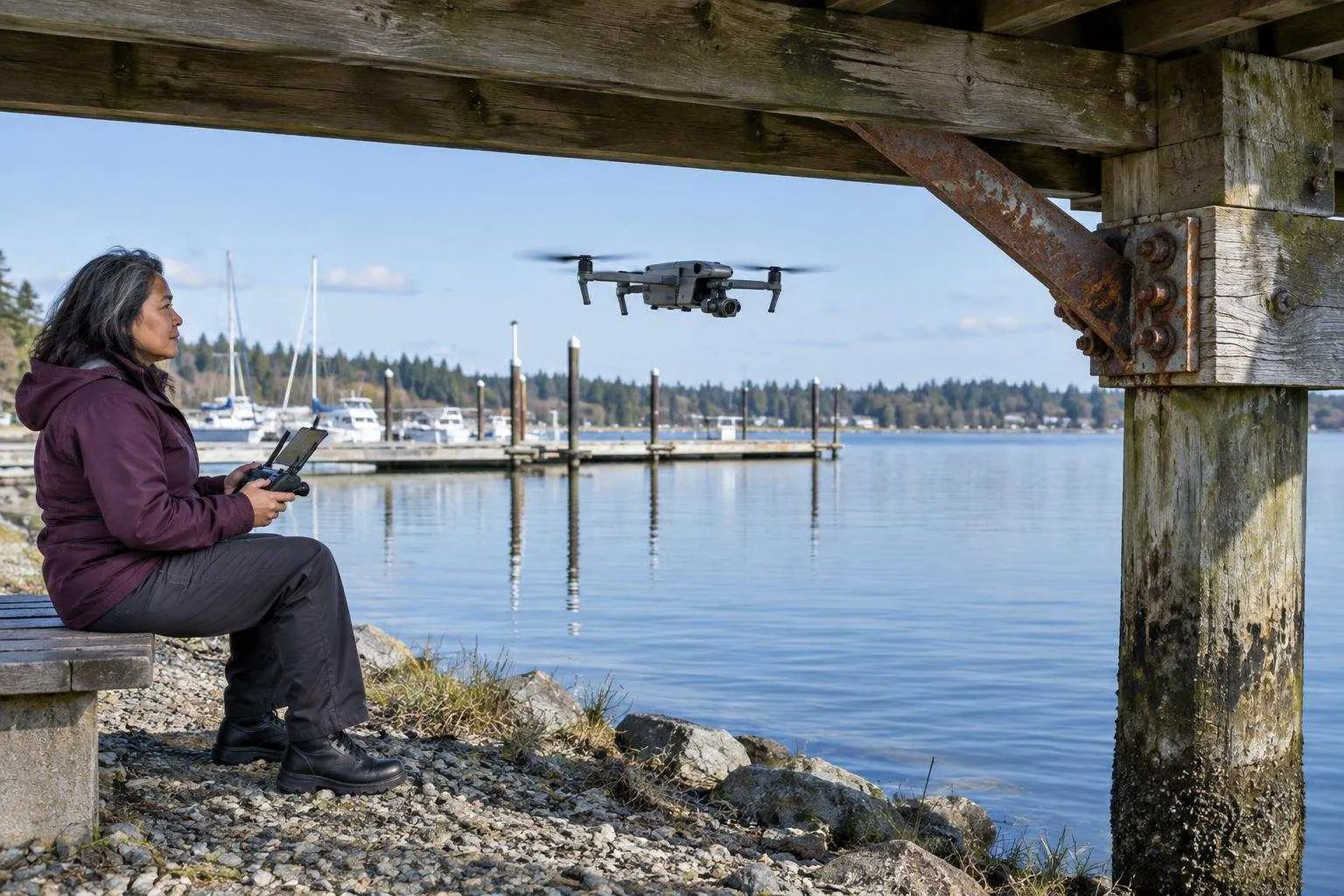
Here’s what most people miss: modern commercial drone inspection isn’t a guy flying a DJI Mavic around your roof taking iPhone-quality shots. FAA Part 107-certified pilots operating RGB, thermal, and multispectral cameras are capturing data that didn’t exist in any usable form ten years ago — geotagged photo sets, thermal overlays, measurement data, delivered within 24–48 hours.
For large-scale work, the economics are decisive. Wind turbine inspections via drone run $300–$769 per turbine. A manual inspection of the same turbine requires cranes, rope access teams, and weather windows that don’t cooperate. Power utility data shows drone inspections reduced worker fatalities by 60% on live high-voltage lines where that work previously required human proximity.
Speed compounds the advantage. A drone crew can complete inspections that would take a manual team days — up to 10 times faster by most field estimates. For a roofing contractor, that means more jobs per day. For a utility company, that means storm damage assessment across a service territory in hours instead of weeks.
Pro Tip:If you’re evaluating drone inspection vendors, ask specifically what sensor package they’re flying. RGB alone misses thermal anomalies. A vendor without thermal capability is selling you half an inspection for full-inspection prices.
What Remote Inspection Cannot Do
I’ll be honest: the marketing around drone inspection has gotten ahead of the technology. Some things a drone simply cannot tell you.
Hidden rot, soft decking, moisture intrusion paths, compromised flashing details, under-shingle damage — none of this is visible from the air. You need touch. You need someone who can press on a soft spot, trace a moisture stain back to its source, or notice the slight give in a ridge that signals structural compromise.
Confined spaces are another hard limit. NIOSH records 92 confined space workplace deaths per year in the U.S. — the drone pitch is that UAVs eliminate human entry needs. True, for visual inspection. But if there’s a structural concern inside a tank, a pipe, or a tight mechanical space, visual confirmation from above tells you something’s wrong. It doesn’t tell you what to do about it.
Reality Check:If a vendor pitches you a remote-only inspection for a property with suspected moisture damage or hidden structural issues, walk away. They’re either overselling the technology or they don’t understand what you actually need.
The Honest Comparison
| Factor | Remote Drone | In-Person Traditional | When to Use Which |
|---|---|---|---|
| Safety | Eliminates fall/confined space risk entirely | 35% of workplace fatalities involve heights | Drone for hazardous elevated work |
| Speed | Up to 10x faster; multiple sites per day | Slow on steep/large structures | Drone for large areas, time pressure |
| Hidden damage | Cannot detect rot, moisture, under-shingle issues | Touch + access catches subtle failures | Human for any suspected hidden damage |
| Cost | No scaffolding, small crew, lower overhead | Cranes, scaffolding, large labor teams | Drone for routine monitoring |
| Documentation | Geotagged, timestamped, thermal overlays | Handwritten notes, photos from ground | Drone for insurance/legal documentation |
| Complex architecture | Struggles with tight corners, intricate features | Navigates complex geometry effectively | Human for architectural complexity |
| Post-storm claims | Fast wide-area damage documentation | Slow; can’t cover large territories quickly | Drone for initial claims triage |
The Post-Pandemic Reality Check
COVID accelerated remote inspection adoption out of necessity, and the industry didn’t fully walk it back. Insurance adjusters now routinely use drones for storm damage documentation. Construction progress monitoring is largely drone-first. The argument that “you need someone there” got stress-tested against “you literally can’t send someone there” — and remote held up better than skeptics expected.
But the pandemic also revealed what remote can’t replace: the inspector who notices the smell of mold in a crawl space, or feels the flex in a deck board that no camera angle captures. Remote inspection expanded the ceiling on what’s possible from a distance. It didn’t remove the floor of what requires presence.
The hybrid model is what serious operators actually use. Drone for the overview, measurements, documentation, and anything visible from elevation. Human follow-up only where the drone flags something ambiguous or where known limitations apply — hidden moisture, structural touch-testing, confined interior access.
This isn’t a compromise. It’s a more efficient allocation of expensive human attention.
Practical Bottom Line
If you’re a general contractor, facility manager, or insurance adjuster deciding between remote and in-person inspection services, run through this checklist:
Go remote-first if:
- The structure is elevated, hazardous, or hard to access safely
- You need fast wide-area coverage (multiple roofs, long transmission lines, wind farm)
- The goal is documentation, measurements, or thermal anomaly detection
- It’s a routine monitoring situation, not a suspected-damage investigation
Add human verification if:
- You have any reason to suspect hidden rot, moisture, or structural compromise
- The architecture is complex and the drone can’t get clean angles
- Your insurance claim or legal situation requires certified in-person sign-off
- The drone flags something ambiguous that needs a professional judgment call
For more on what drone inspection services include and how to evaluate vendors, see The Complete Guide to Drone Inspection Services.
The facility manager from my opening story eventually got what he actually needed: a proper drone survey first, followed by a certified inspector for the sections where the imagery showed potential issues. It cost less than the original all-human job, took less time, and produced better documentation. Nobody had to climb anything unnecessarily.
That’s the future of this industry. The debate isn’t remote vs. in-person. It’s figuring out which parts of your specific inspection actually need which.
Done reading? Get quotes from drone inspection services near you.
Takes about a minute. Free, no obligation; providers reply to you directly.
Popular cities:
Nick built this directory to help general contractors and risk managers find FAA Part 107-certified drone inspectors without wading through generalist photography outfits that added a drone as an upsell — a conflict of interest he ran into when trying to document storm damage on a commercial roof and couldn’t tell which operators carried the commercial liability insurance to back their reports.