Get free quotes from drone inspection near you
Takes about a minute. Free, no obligation; providers reply to you directly.
The first time I scheduled a drone inspection for a job site, I assumed the pilot would just show up, fly around, and hand me photos. Simple. What I didn’t anticipate was the pilot arriving to find the crane operator hadn’t been briefed, half the roof was blocked by tarping, and we were 500 feet inside a Class D airspace bubble that nobody had cleared. We lost half a day and had to reschedule at full cost.
That was an expensive lesson in what “preparation” actually means when a drone is involved.
The Short Version:Most drone inspection delays and do-overs aren’t the pilot’s fault — they’re the client’s. Whether you’re a GC, utility manager, or claims adjuster, the work you do before the drone arrives determines whether you get usable data or a wasted afternoon. Here’s the checklist that prevents the avoidable stuff.
Key Takeaways
- FAA airspace approvals (LAANC) require 24–72 hours — missing this deadline is the #1 cause of day-of cancellations
- Utilities should start with 1–2 focused use cases (visual pole/conductor inspections) before layering in thermal imaging
- Insurers relying on visual-only data miss subsurface defects that thermal catches — it’s not optional on claims work
- Post-flight data backup and file naming aren’t the pilot’s problem; establish your own retention protocol before the session
The Universal Pre-Flight Checklist (Any Sector)
These items apply whether you’re inspecting a transmission line or a storm-damaged shingle roof. If something on this list isn’t done, the session is at risk.
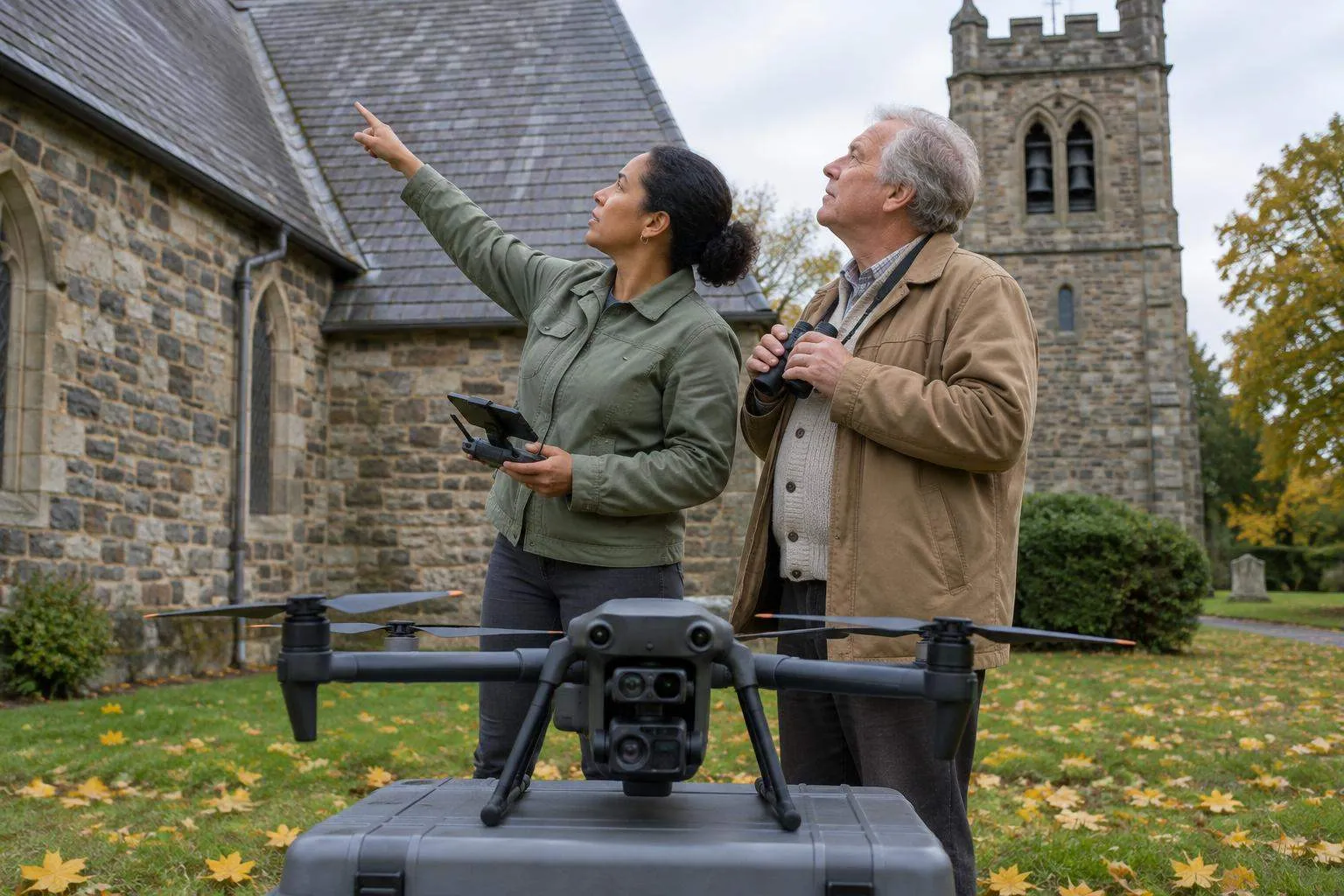
1. Site assessment (do this days before, not the morning of) Pull satellite imagery — Google Earth works fine — and map obstacles: power lines, trees, cellular towers, adjacent structures. Identify your takeoff/landing zones and flag any access constraints. A pilot flying in cold has about 10 minutes of on-site discovery time before batteries start burning. Don’t waste it on surprises you could have found from a desk.
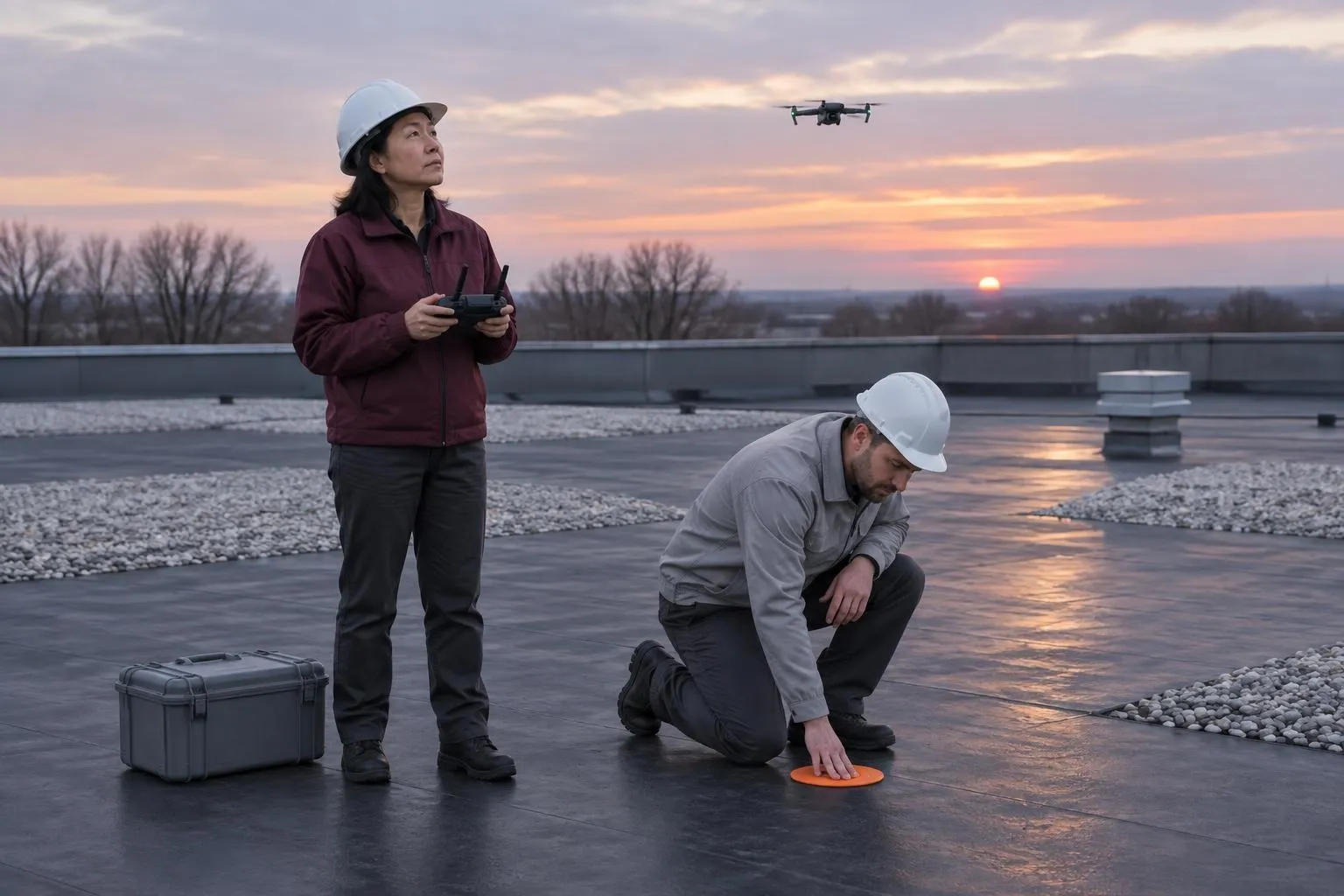
2. Weather window Check wind speed, precipitation, and visibility for a window that actually works. Most commercial drones have meaningful performance degradation above 15–20 mph sustained winds. Book a weather window, not a calendar block.
3. Airspace clearance This is the one that bites people. If your site is near an airport, helipad, or controlled airspace, your pilot needs a LAANC authorization or manual FAA waiver. Allow 24–72 hours minimum. Showing up to a controlled airspace without clearance isn’t a minor inconvenience — the flight doesn’t happen.
4. Credentials and insurance verification Confirm your pilot holds FAA Part 107 certification. Get a copy of their liability insurance certificate before the session. If you’re in a jurisdiction with additional requirements (some utilities and government contracts require specific endorsements), verify those too.
5. Define the deliverable upfront “I need photos of the roof” is not a flight plan. Tell your pilot: coverage area, required angles, resolution needs, specific defect types you’re looking for, and your delivery format. If you need thermal overlays, say so before they load their equipment. Changing scope on-site wastes everyone’s time.
General Contractors: Your Specific Checklist
Pro Tip:Desktop surveys — reviewing satellite imagery and recent site photography before the drone visit — are how experienced GCs eliminate 90% of day-of surprises.
GCs typically use drone inspections for construction progress documentation, stockpile volume calculations, and pre-close roof assessments. Your prep list:
- Mark no-fly zones on site (active crane swing paths, personnel areas)
- Brief your crew — especially operators of heavy equipment — on the flight window
- Have current plans on hand so the pilot can verify coverage against your actual scope
- Clear tarping or temporary covers from surfaces you need documented
- For stockpile calculations: flag pile boundaries clearly; geolocated data and photogrammetry only work if the reference points are clean
- Request systematic grid or circular flight paths with enough image overlap for mapping accuracy
Here’s what most GCs miss: if your deliverable is a progress report for a stakeholder presentation, say that. The pilot can prioritize angles that communicate narrative, not just coverage.
Utilities: Your Specific Checklist
The utilities that get the most out of drone inspection programs don’t try to do everything at once. They start with one or two high-priority use cases — visual inspections of poles and conductors are the most common entry point — develop SOPs, and scale based on results.
Reality Check:Jumping straight to thermal imaging of a 50-mile transmission corridor before your team has a data management workflow is how you end up with 40,000 images and no actionable findings.
- Identify your 1–2 priority inspection types for this session (visual, thermal, vegetation encroachment, storm damage)
- Verify airspace along the right-of-way — transmission corridors frequently cross controlled or restricted airspace
- Establish proximity rules for energized equipment and brief your visual observer
- Have right-of-way documentation accessible on-site
- Pre-assign data storage and file naming conventions — post-flight is too late to figure this out
- Run a safety briefing covering emergency response if the drone goes down near energized infrastructure
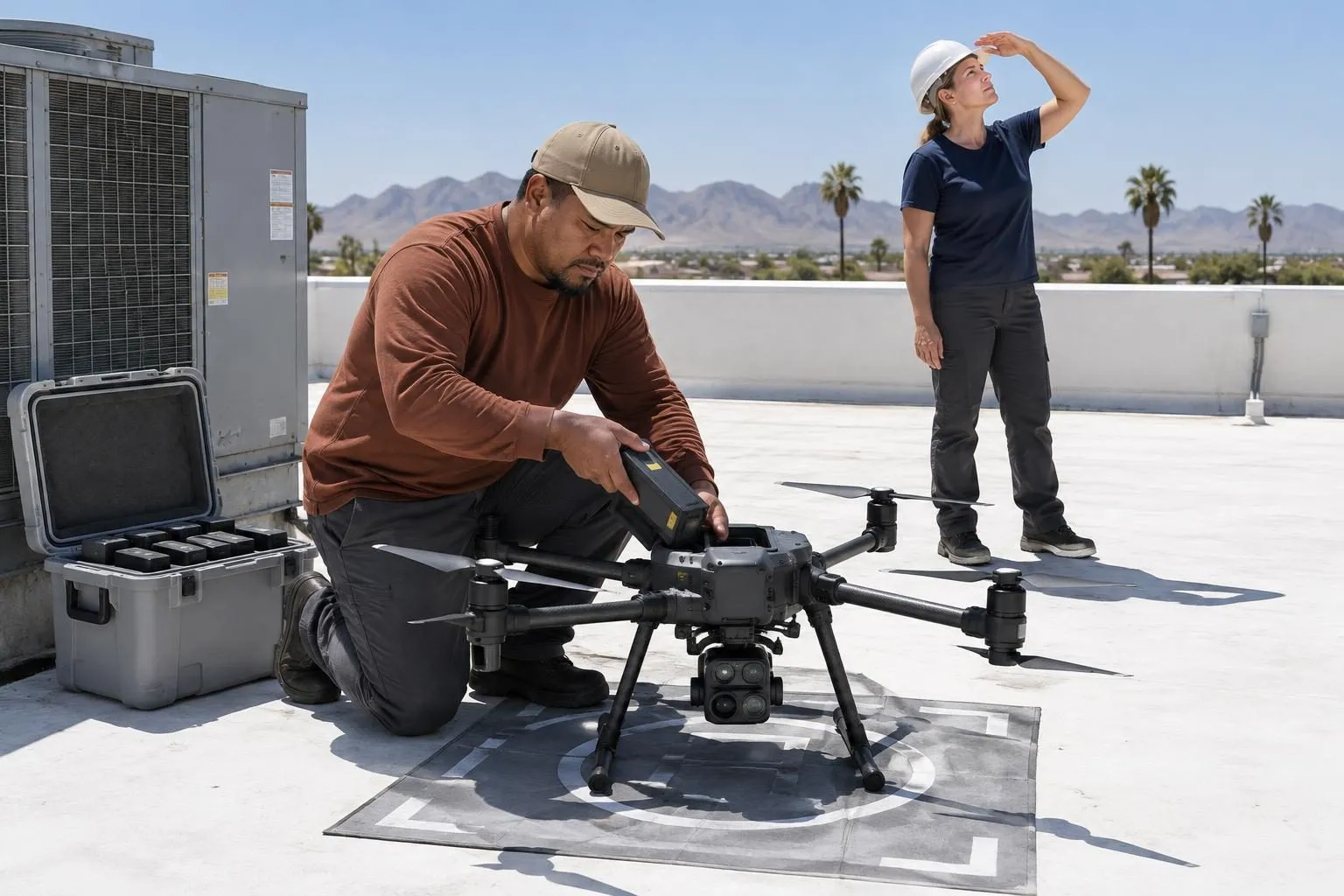
- Bring spare batteries and sensors; unexpected downtime from equipment failure is avoidable with redundancy
| Inspection Type | Common Starting Use Case | When to Add Thermal |
|---|---|---|
| Visual (poles/conductors) | Yes — most common entry point | After SOP is established |
| Vegetation encroachment | Year 1–2 for most utilities | Not required |
| Thermal hotspot detection | After visual program matures | From the start |
| Storm damage assessment | Reactive, as-needed | Recommended for critical assets |
Insurers: Your Specific Checklist
Claims-based drone inspections have one job: document everything before remediation starts. Incomplete documentation creates disputes. Full-coverage documentation closes claims faster.
- Mandate full elevation coverage — rear facades, courtyards, and parapets are routinely missed when scope isn’t explicit; incomplete coverage creates disputes
- Always include thermal — visual-only inspections miss subsurface moisture intrusion, hidden hail damage patterns, and insulation failures that thermal catches; it’s not an upgrade, it’s a requirement for thorough claims work
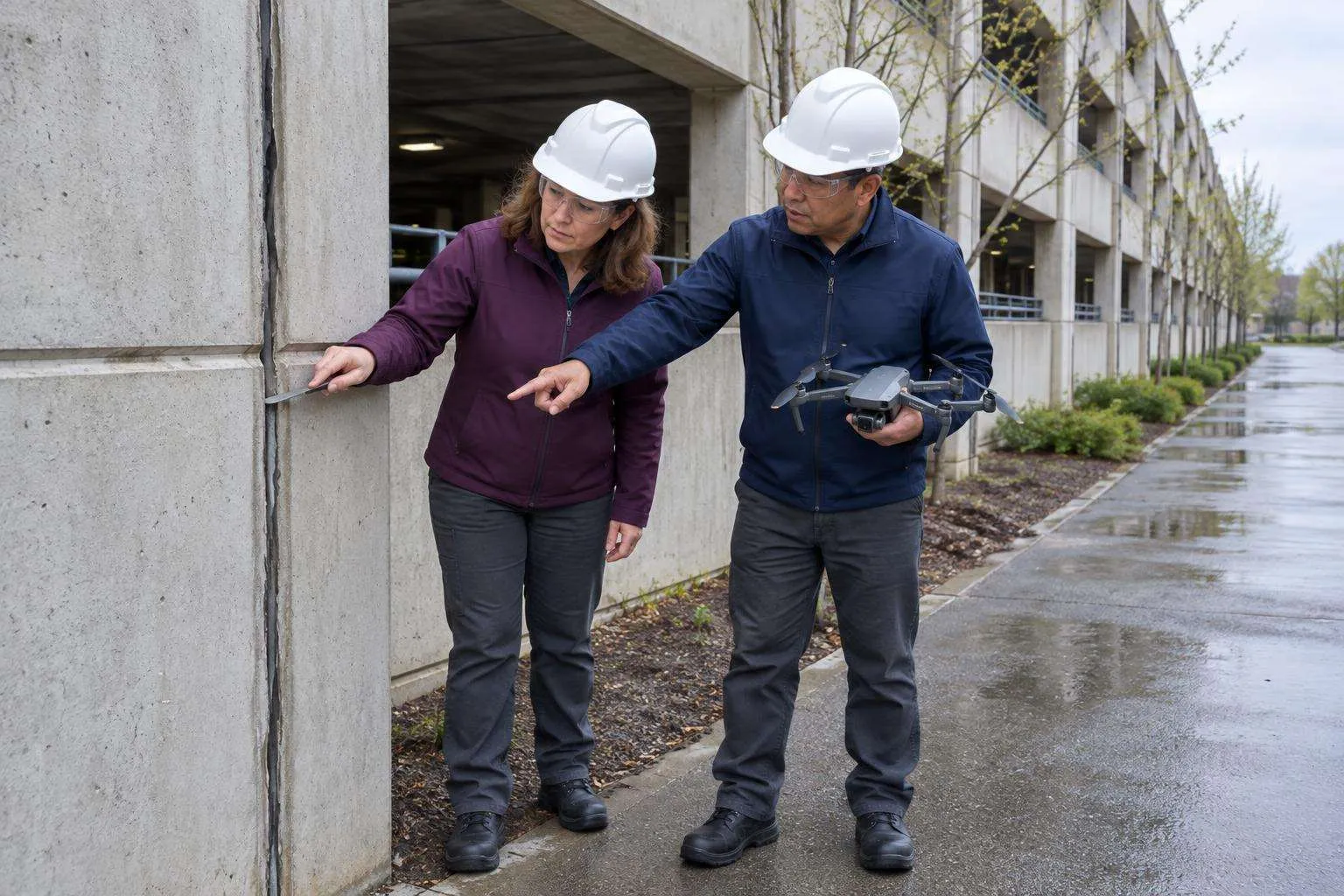
- Specify close-up coverage of drains, joints, flashing, and penetrations — these are where damage concentrates and where photos get challenged
- Confirm your pilot can deliver geotagged imagery with metadata intact
- If the property requires a PE-endorsed report (common for commercial facade inspections), build that into your vendor selection and timeline — it’s not something you add after the fact
- Establish your remediation documentation protocol before the drone lifts off; the clock on deadline pressure starts the moment a defect is documented
Nobody tells you this: the difference between a fast claim close and a protracted dispute is almost always documentation completeness, not damage severity.
Post-Flight: Don’t Drop the Ball Here
The flight is over. You’re not done.
- Back up raw files immediately — don’t wait until you’re back at the office
- Run a quick quality check: blurry frames, shadow interference, and gaps in coverage need to be caught before the pilot leaves the site
- Lock in your file naming and retention protocol; retrieval three months from now depends on organization you do today
- Log the session: weather conditions, equipment used, any deviations from the flight plan
Practical Bottom Line
The drone is the easy part. Every inspection session that fails does so because of something that could have been handled before the pilot showed up: an airspace approval that nobody filed, a crew that wasn’t briefed, a deliverable that wasn’t defined, a scope that excluded the surfaces that mattered most.
Run this checklist two to three days before your session — not the morning of. Give your pilot a written brief. Define your deliverable in writing. Build in thermal imaging if defect discovery is the point.
For a broader look at how drone inspection services work across industries, see The Complete Guide to Drone Inspection Services. If you’re evaluating vendors, the table in that guide covers what to look for in pilot credentials, equipment, and turnaround guarantees.
The pilots who do this work well are professionals. They show up ready. The question is whether you do.
Done reading? Get quotes from drone inspection services near you.
Takes about a minute. Free, no obligation; providers reply to you directly.
Popular cities:
Nick built this directory to help general contractors and risk managers find FAA Part 107-certified drone inspectors without wading through generalist photography outfits that added a drone as an upsell — a conflict of interest he ran into when trying to document storm damage on a commercial roof and couldn’t tell which operators carried the commercial liability insurance to back their reports.